
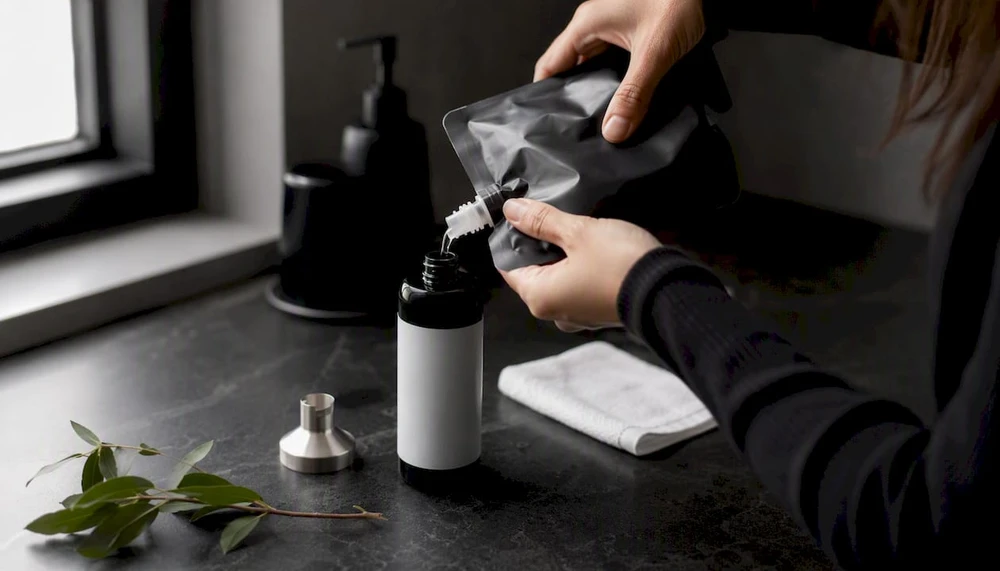
Refill Your Botanical Skincare: Convenient, Sustainable Options
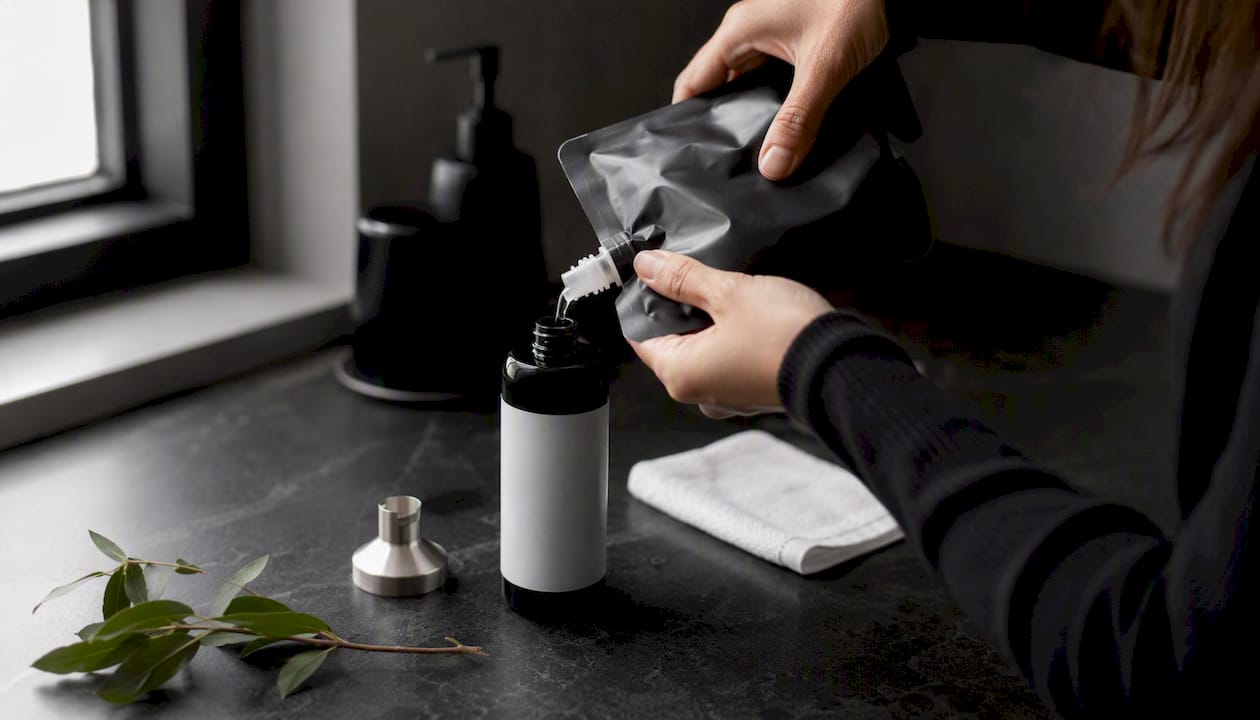
Yes, refilling botanical skincare and body-care products is genuinely practical, and it saves you money once you reuse the same vessel at least two to three times with a format that fits your routine. A Provoke Insights survey of 1,500 U.S. adults found ease of refilling (57%) and durability (42%) are the top things buyers want from refillable packaging. Theholisticscienceco designs its botanical products with exactly that in mind.
Best product categories for refills:
- Body lotions, hand and body washes, body oils, and facial moisturizers
- Deodorant sticks, lip balms, and healing sprays
Formats to prioritize:
- Refill pouches with spouts that pour cleanly into a durable pump bottle
- Pod or cartridge inserts for balms and solid formats
Key Takeaways
Refilling botanical skincare is practical, cost-effective, and genuinely better for the environment, but only when you pick the right format and reuse the vessel consistently.
| Point | Details |
|---|---|
| Ease of use comes first | 57% of buyers prioritize ease of refilling; pick pouches or cartridges that transfer in under two minutes. |
| Break-even takes 2–3 refills | Most refillable systems recover the higher vessel cost after two to three refill cycles, depending on pricing. |
| Environmental gains require reuse | A single refill can cut packaging impacts by around 35%; benefits grow with each additional cycle. |
| Hygiene is simple but non-negotiable | Clean and fully dry the vessel before every refill; label with the refill date and follow shelf-life guidance. |
| The Holistic Science Co. | Offers refill pouches, compatible durable vessels, and subscription delivery for botanical body-care products. |
Table of Contents
- Why should you consider refilling your skincare products?
- What refill formats work best for botanical skincare?
- How do you refill at home without making a mess?
- What design features matter when you choose refillable skincare?
- When do refills actually save you money?
- What do life-cycle studies actually show about refill sustainability?
- Where can you buy botanical skincare refills in the U.S.?
- Is refilling botanical skincare safe and hygienic?
- Why convenience-first design is the only refill design that works
- Theholisticscienceco makes refilling your botanical skincare genuinely easy
- Sources
Why should you consider refilling your skincare products?
Refilling reduces packaging material, lowers your cost-per-use over time, and lets you keep a beautiful, durable vessel you already love. For botanical skincare, where premium ingredients often come in premium packaging, that vessel is worth protecting.
The limits are real, though. Refills only deliver environmental benefit when you actually follow through and reuse the container multiple times. Mintel reports that more than 70% of U.S. consumers find in-store refilling inconvenient, which is why at-home refill formats have grown so quickly.
Stat to know: Convenience is the single biggest barrier to refill adoption in beauty. More than 70% of U.S. consumers say in-store refilling is inconvenient, per Mintel’s beauty packaging research.
Other common barriers worth knowing:
- Messiness during transfer, especially with thin oils or watery serums
- Uncertainty about whether a refill pack is compatible with an existing bottle
- Limited availability of refill SKUs from smaller artisanal brands
What refill formats work best for botanical skincare?
Each format suits a different product type and routine. Here is a plain-language breakdown.
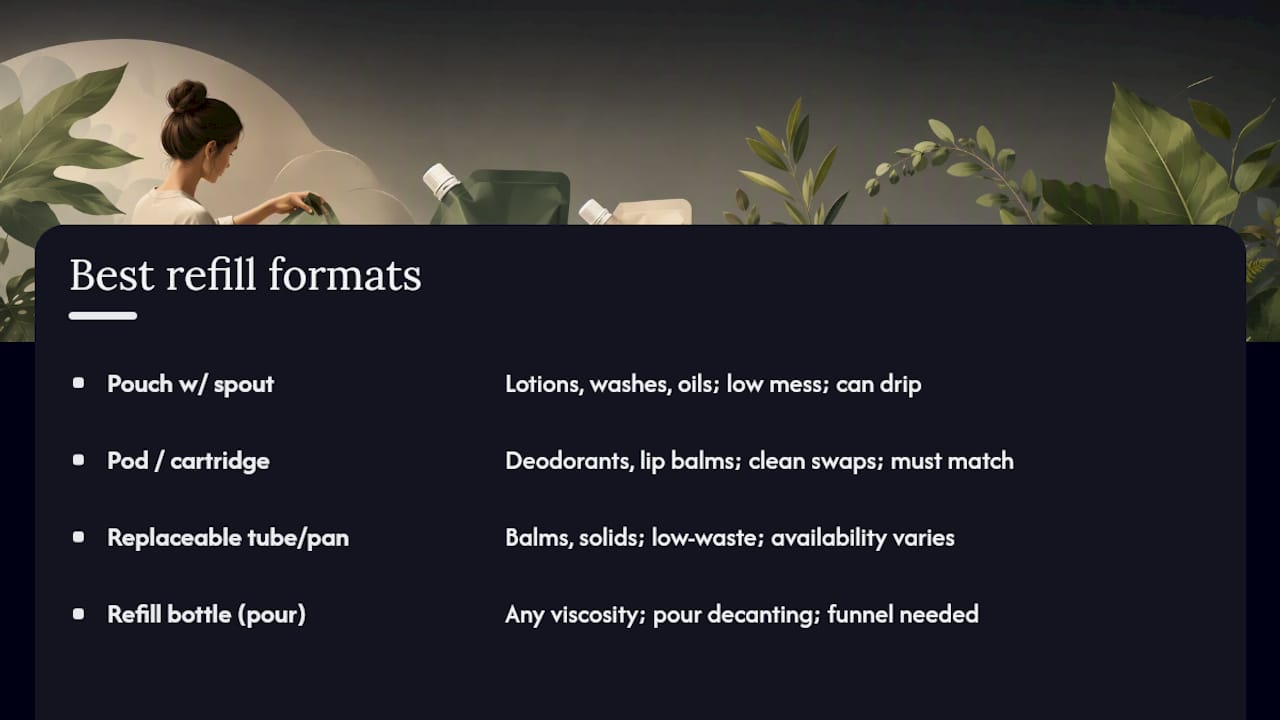
Refill pouch with spout. A flexible, lightweight bag with a nozzle you squeeze or pour into your existing bottle. Works beautifully for lotions, body washes, and oils. Minimal mess, easy to store flat, and pouch designs can reduce material use dramatically compared with rigid packaging. The main downside: thin liquids can drip if you rush.
Pod or cartridge insert. A sealed unit that clicks or slides into a durable outer shell. Common for deodorant sticks and some lip balm formats. Very clean to swap, no pouring required. Compatibility is the key question: the pod must match the outer vessel exactly.
Replaceable tube or pan. A fresh inner tube or pressed-powder pan that drops into a compact or outer sleeve. Great for balms and solid formats. Lightweight and low-waste, though availability varies by brand.
Refill bottle (large-format pour). A bigger bottle you decant into a smaller daily-use bottle. Familiar and low-tech. Works for any viscosity but requires a clean funnel for thicker creams.
Pro Tip: Choose a format that mirrors something you already do. If you refill a water bottle daily, a pour-style refill bottle will feel natural. If you prefer zero-mess swaps, a cartridge or pod insert is your best match.
How do you refill at home without making a mess?
A clean, repeatable routine makes refilling easy every single time. Follow these steps for creams, oils, and balms.
- Gather your supplies. Clean funnel (for thick creams), paper towel, and the refill pack or bottle. Wash your hands thoroughly.
- Empty and clean the vessel. Rinse with warm water, then wipe dry. For pump bottles, run warm water through the pump two or three times. Let it air-dry completely before refilling.
- Sanitize if needed. For water-based products like lotions, wipe the inside of the vessel with a cotton pad lightly dampened with isopropyl alcohol. Skip this step for anhydrous oils and balms.
- Transfer the product. For pouches, open the spout and squeeze slowly into the vessel. For thick creams, use a clean funnel. For thin oils, pour directly and cap immediately.
- Seal and label. Close the vessel tightly, wipe the outside clean, and write the refill date on a small label or piece of tape.
- Dispose of the empty refill pack. Check whether it is recyclable or compostable in your area before tossing.
For pump and airless systems, check the inner seal or dip tube every three to four refills. If the pump feels sluggish or the seal looks worn, replace it before the next cycle.
What design features matter when you choose refillable skincare?
Use this checklist before you buy any refillable botanical skincare system.
- Ease of refill. Can you transfer the product in under two minutes without tools? This is the most important factor, confirmed by Provoke Insights and Mintel research.
- Durability. Is the vessel rated for multiple refill cycles? Glass and aluminum outlast most plastics.
- Clear compatibility labeling. Does the packaging state which refill SKU fits this vessel?
- Closure design. A spout or pump closure beats a wide-mouth jar for mess-free transfers.
- Refill availability. Are refill packs sold on the brand’s site and shipped to U.S. addresses?
- Price gap. Is the refill meaningfully cheaper than buying a full-size replacement?
A structural-equation study found that ease of use and economic usefulness are the strongest predictors of whether someone actually uses a refill system. Environmental appeal alone rarely drives follow-through.
Pro Tip: Before buying, ask the brand’s customer service two questions: how many refill cycles the vessel is rated for, and what cleaning method they recommend. A brand that can answer both is one that has thought the system through.
When do refills actually save you money?
The math is simple. Add the vessel cost to the cost of however many refills you plan to buy. Then compare that total to buying the same number of full-size single-use products.
Sample break-even scenarios:
Industry pricing research shows that consumers typically need a few refills before savings become noticeable, depending on the brand’s pricing structure. Amcor’s consumer research found that 86% of buyers expect refills to cost less than the original product, so if a refill is priced at or above the full-size price, it is not a good deal.
Key pricing rules to remember:
- A higher vessel cost is fine if the refill discount is deep enough to recover it within three cycles
- Subscription pricing often unlocks the best per-refill rate
- Small-batch botanical brands may price refills closer to full-size due to production scale, so check before committing
What do life-cycle studies actually show about refill sustainability?
Refills can meaningfully reduce packaging impacts, but only under specific conditions. Peer-reviewed LCA research shows that removing resource-heavy components and ensuring high recycling rates or multiple reuse cycles can reduce packaging impacts substantially, with some modeled cases showing up to a 74% reduction when materials were fully recycled.
LCA finding: A Circular-LCA study comparing single-use rigid bottles with concentrate pouches found that one refill reduced packaging-related impacts by an average of 35%, with gains increasing across additional reuse cycles.
The catch, as Allure’s sustainability reporting notes, is that some reusable packaging needs many refills to offset its own production footprint. A heavy glass vessel that gets refilled once and then sits in a drawer delivers no net benefit.
Design and behavior levers that change outcomes:
- Lightweight durable vessels (aluminum or thin-walled glass) over heavy decorative ones
- Refill pouches, which use far less material than rigid replacements
- Consistent reuse over at least three to five cycles
- Choosing brands that offer compostable or recycled-content packaging for the refill pouch itself
SPICE guidance recommends designing primary refillable packaging to be durable and light, and stresses that consumer adoption and economic viability are both necessary for reuse models to deliver real environmental gains.
Where can you buy botanical skincare refills in the U.S.?
The most reliable channels for U.S. buyers are direct-to-consumer refill packs from brand websites, retail refill pouches, and subscription deliveries. Each has a different trade-off.
- DTC brand sites. Best for compatibility and freshness. You know the refill fits your vessel, and you can often subscribe for a discount.
- Subscription refill deliveries. The most habit-forming option. Regular deliveries mean you never run out, and subscriptions tend to unlock the lowest per-unit price.
- Retail refill pouches. Convenient for in-person shoppers, though selection is narrower for artisanal botanical brands.
- Mail-back or return schemes. Less common in the U.S. but growing; some brands offer credit when you return empty vessels.
When evaluating any refill seller, check: shipping frequency options, confirmed vessel compatibility, return or recycling policy for empty pouches, and whether subscribers get a meaningful price incentive.
Is refilling botanical skincare safe and hygienic?
Refilling is safe when you follow simple cleaning and storage steps and stick to the manufacturer’s guidance. The main risk is contamination from residue in an improperly cleaned vessel.
- Wash hands before every refill
- Use a clean, dry funnel or spout; never double-dip a spatula into a new refill pack
- Label each vessel with the refill date so you can track shelf life
- Store refilled products away from direct sunlight and heat
- Follow the brand’s stated shelf-life guidance after opening
Water-based products (lotions, serums, healing sprays) require more care than anhydrous formats like body oils and balms, because water-based formulas can support microbial growth if a vessel is not fully dry before refilling. For ingredient-transparent botanical products, always check whether the formula contains a preservative system and what the recommended use-by period is after opening.
Why convenience-first design is the only refill design that works
Most refill programs fail not because buyers don’t care about sustainability, but because the mechanics get in the way of the habit. A refill system that requires a funnel, a YouTube tutorial, and fifteen minutes of cleanup will be used once and abandoned. The research is clear on this: ease of use and economic usefulness drive refill behavior far more than environmental messaging alone.
At The Holistic Science Co., the approach is to pair ingredient transparency with packaging that actually gets reused. That means recommending vessels that integrate with your existing natural skincare routine, not ones that demand a new ritual. Before committing to any refill system, buy one refill pouch and run one or two cycles. If the process takes under two minutes and leaves your counter clean, you have found a system worth sticking with.
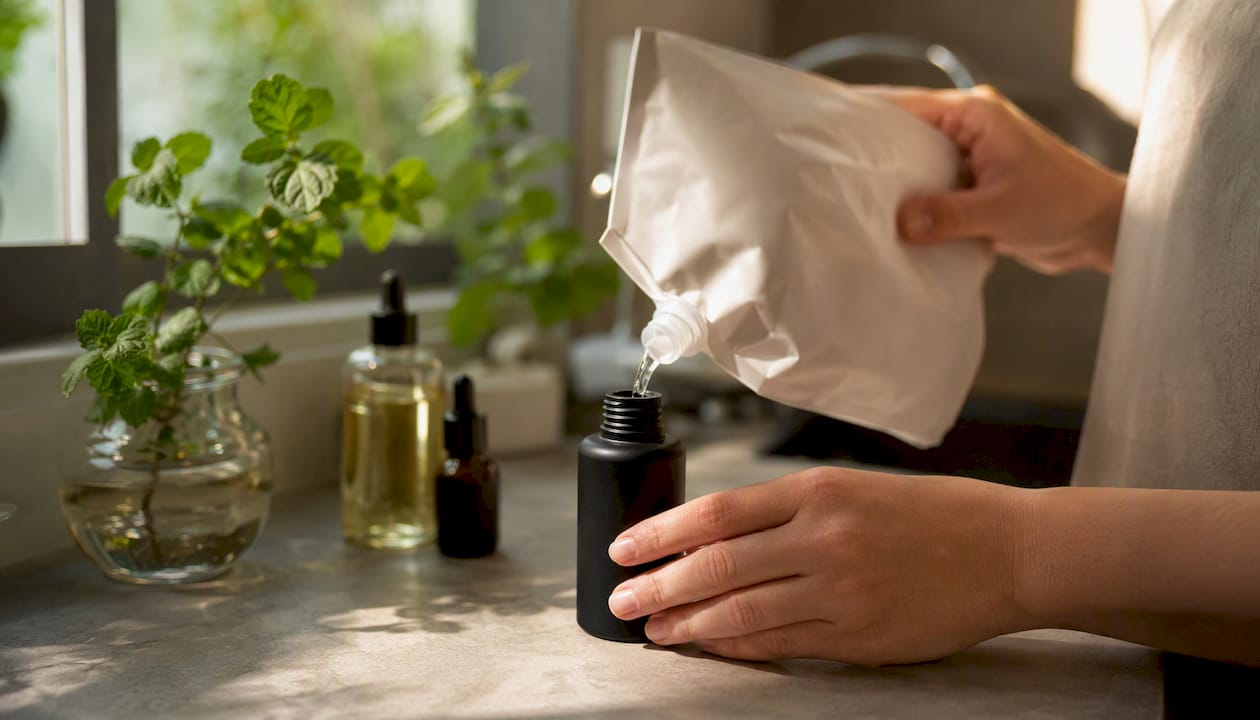
The Holistic Science Co. makes refilling your botanical skincare genuinely easy
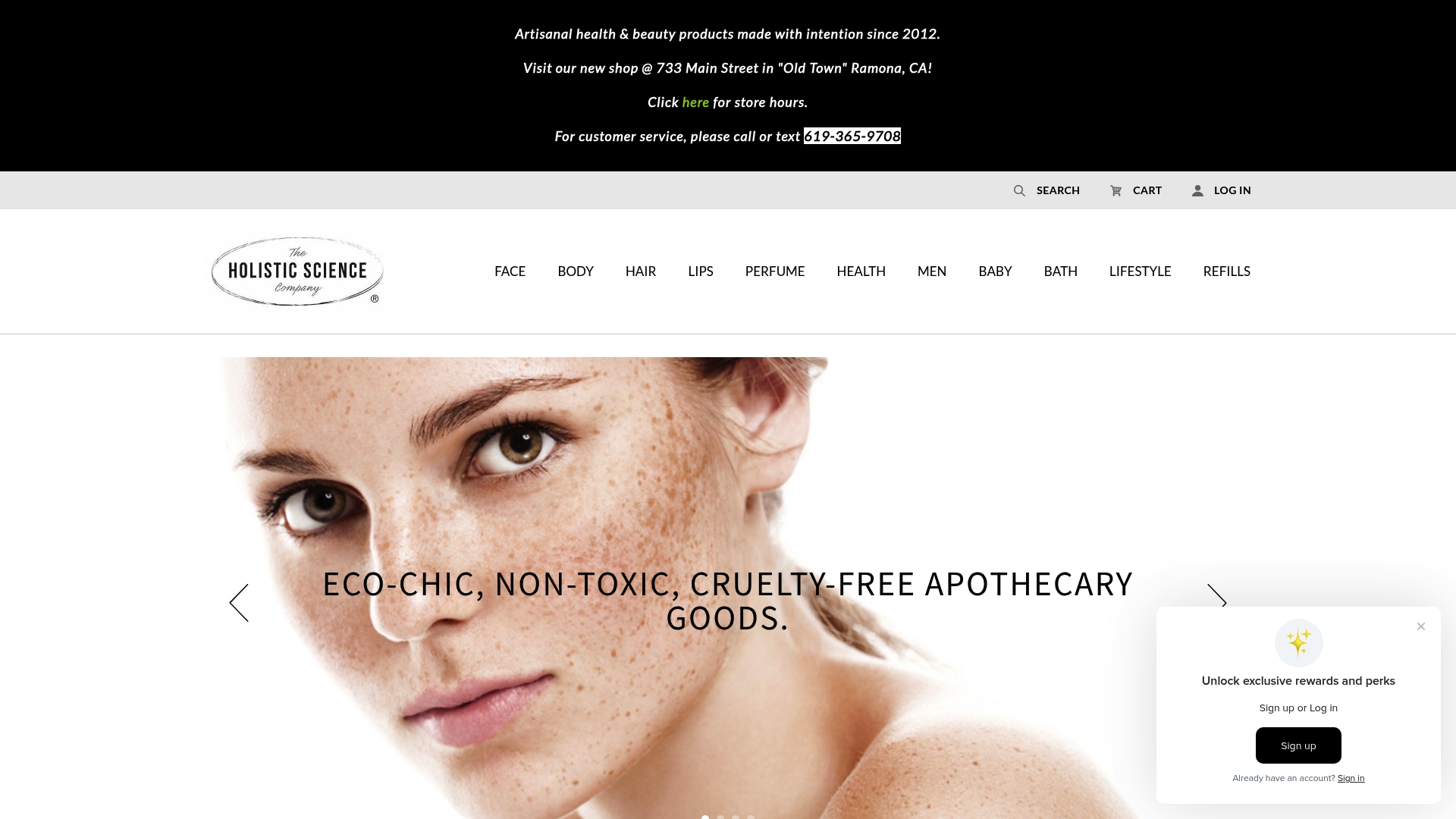
Skip the guesswork of hunting down compatible refill packs. The Holistic Science Co. offers refill-friendly packaging and clearly labeled refill SKUs for selected botanical products, shipped directly to U.S. addresses.
What you get when you shop with The Holistic Science Co.:
- Refill pouches with spout closures designed for mess-free transfer into durable bottles
- Clear compatibility labeling on every refill SKU so you know it fits before you buy
- Subscription options that deliver refills on your schedule at a lower per-unit price
- Formulas made with ingredient-transparent botanicals, free from common synthetic chemicals
Ready to start? Visit The Holistic Science Co. to browse refill SKUs and subscribe for consistent, convenient replenishment of your favorite botanical body-care products.
Sources
- The Future of Beauty Packaging: Here’s What Brands Need to Know | Mintel
- The Latest Findings on Consumer Expectations for Refill-At-Home Packaging Formats
- Determinants of the Intention to Use Refills in the Cosmetic Industry
Recommended
- Plant-Based Botanical Skincare: Pick Ingredient-Transparent Products - The Holistic Science Co.
- Reuse, Refill, Reduce: Your Practical Waste Guide - The Holistic Science Co.
- Types of Natural Skincare Ingredients: Your Full Guide - The Holistic Science Co.
- Build a Natural Skincare Routine for Healthy Skin - The Holistic Science Co.