
What Is Clean Beauty? Your 2026 Ingredient Guide
Clean beauty is defined as the formulation and use of skincare and cosmetic products made without ingredients known or suspected to cause harm to human health. The term covers a broad movement built on four core principles: transparency, safety, ethics, and sustainability. What makes clean beauty genuinely complex is that no legal federal definition exists in the United States, which means every brand gets to write its own rules. That gap between marketing and regulation is exactly what you need to understand before you spend a single dollar on products labeled “clean.”
What is clean beauty and why does the definition vary so much?
Clean beauty, by the most widely accepted clean beauty definition, means products free from ingredients linked to endocrine disruption, carcinogenicity, or skin sensitization. The problem is that “clean” carries no legal weight in the US. The FDA has banned fewer than 30 ingredients from cosmetics, while the European Union restricts more than 1,300. That gap is staggering, and it means a product sold legally in the US could be pulled from shelves in Germany.
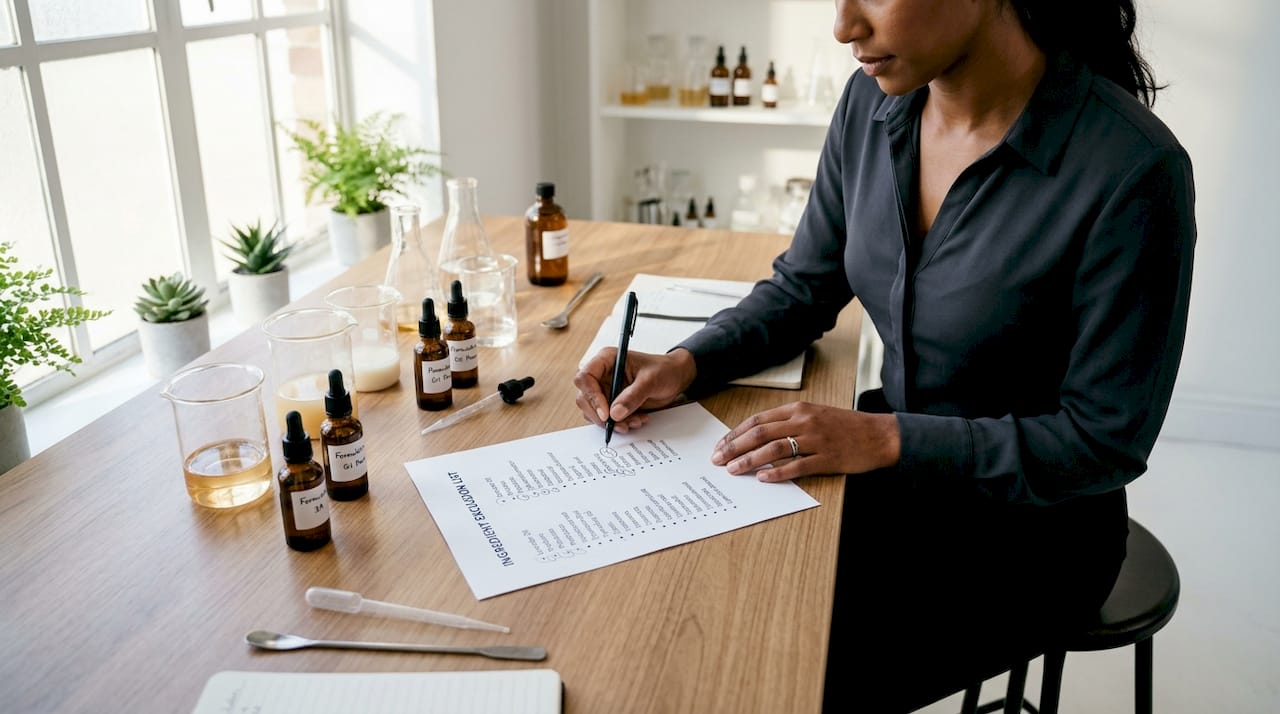
Because no federal standard exists, brands set their own exclusion lists. Credo Beauty, one of the most rigorous US retailers, excludes over 2,700 ingredients. Other brands might ban 50. Both can legally call themselves “clean.” This fragmentation creates real confusion for shoppers trying to make informed choices.
Here is a quick comparison of how regulatory environments shape what “clean” actually means in practice:
| Region / Standard | Ingredients Restricted | Legal Enforcement |
|---|---|---|
| US FDA | Fewer than 30 | Federal law, limited scope |
| European Union | More than 1,300 | Mandatory compliance |
| Credo Beauty (retailer) | Over 2,700 | Brand policy, voluntary |
| Average clean brand | Varies widely | Self-regulated |
The takeaway here is practical. When a brand says “clean,” your first question should be: clean by whose standard? Asking that one question cuts through most of the marketing noise immediately.
What ingredients are commonly excluded in clean beauty products?
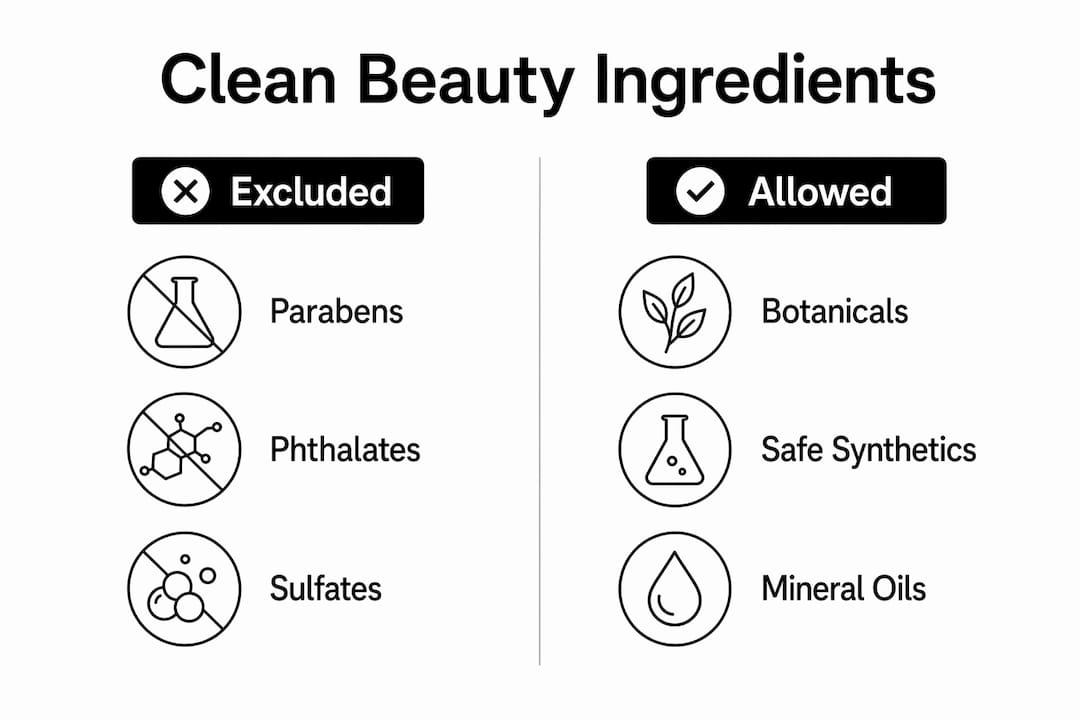
Clean beauty products typically exclude a core group of chemicals with documented health concerns. Understanding why these ingredients appear on exclusion lists helps you make smarter choices rather than just trusting a label.
- Parabens (methylparaben, propylparaben): Synthetic preservatives that mimic estrogen in the body. They are linked to endocrine disruption and have been detected in breast tissue samples, which raised enough concern to prompt many brands to reformulate.
- Phthalates: Plasticizing chemicals often hidden inside “fragrance” on ingredient labels. They are associated with hormonal disruption and reproductive harm, particularly with long-term exposure.
- Synthetic fragrances: A single “fragrance” listing can contain dozens of undisclosed chemicals, including allergens and sensitizers. This lack of transparency is one of the biggest red flags in conventional beauty.
- Formaldehyde releasers (DMDM hydantoin, quaternium-15): Preservatives that slowly release formaldehyde, a known carcinogen, into products over time. They are still legal in the US.
- Sulfates (SDS, SLES): Harsh surfactants that strip the skin barrier and can cause irritation, especially for sensitive or compromised skin.
One nuance that gets overlooked: dosage and exposure matter enormously in toxicology. A trace amount of a questionable ingredient in a rinse-off product carries far less risk than the same ingredient in a leave-on moisturizer you apply daily. Clean beauty at its best accounts for this context, not just a blanket ban.
Pro Tip: Natural does not automatically mean safe. Essential oils like cinnamon bark and clove can cause severe sensitization, and botanical extracts can trigger allergies just as easily as synthetic compounds. Always patch-test new products, clean or otherwise.
How does clean beauty address health equity and why does it matter?
Clean beauty is not just a skincare trend. For many communities, it is a health justice issue. Research shows that Black women face 80% more toxic ingredient exposure from beauty products compared to white women. That disparity is not accidental. It reflects decades of marketing that pushed products containing relaxers, skin-lightening agents, and heavy fragrances specifically to Black consumers, often without adequate safety disclosure.
The numbers are sobering. 1 in 12 products marketed to Black women are ranked highly hazardous by environmental health databases. These products include hair relaxers, skin lighteners, and certain leave-on treatments that contain formaldehyde releasers, mercury, and hormone-disrupting chemicals at levels far above what most clean beauty standards would permit.
“Clean beauty, at its most meaningful, is not about luxury skincare for a narrow demographic. It is about the right of every person to put safe products on their body without being exposed to preventable health risks.”
The Clean Beauty Coalition and organizations like the Environmental Working Group have pushed for federal reform that would close the regulatory gap between the US and EU. This advocacy work positions clean beauty as part of a broader movement for health equity, not just a premium product category. When you choose to support brands that prioritize ingredient transparency and inclusive formulation, you are participating in something larger than your morning routine.
How can consumers identify trustworthy clean beauty products and avoid greenwashing?
Greenwashing is the practice of using vague, feel-good language like “natural,” “pure,” or “green” without any substantive ingredient transparency to back it up. It is the single biggest obstacle to making genuinely informed clean beauty choices. Here is how to cut through it.
- Read the full ingredient list. Every trustworthy clean beauty brand publishes a complete INCI (International Nomenclature of Cosmetic Ingredients) list. If a brand hides behind “proprietary blend” or omits the list entirely, that is a red flag.
- Look for credible third-party certifications. Labels like Leaping Bunny (cruelty-free), ECOCERT (organic and natural standards), and NSF/ANSI 305 (personal care products with organic ingredients) carry real verification requirements. These third-party certifications are far more reliable than any brand’s self-applied marketing claim.
- Build your personal “no list.” Because clean standards vary so widely, your own priorities matter most. If you are pregnant, you might prioritize avoiding retinoids and salicylic acid. If you have a hormone-sensitive condition, parabens and phthalates move to the top of your list. Personalize your standard.
- Use ingredient databases. Tools like the Environmental Working Group’s Skin Deep database rate individual ingredients and full products on a hazard scale. It is not perfect, but it gives you a starting point grounded in published research rather than brand copy.
- Watch for sustainability claims too. Environmentally responsible production, including biodegradable packaging and ethical sourcing, is a genuine pillar of clean beauty. If a brand claims sustainability but ships in single-use plastic with no recycling program, that inconsistency tells you something.
Pro Tip: When evaluating a new brand, search their name alongside “full ingredient list” and “INCI.” If that information is hard to find, the brand is not prioritizing the transparency that clean beauty actually requires.
What are best practices for transitioning to a clean beauty routine?
Making the switch to clean beauty works best as a gradual process, not an overnight overhaul. Swapping every product at once makes it nearly impossible to identify what is working and what is causing a reaction.
- Introduce one product at a time. Space new additions 1 to 2 weeks apart so your skin has time to adjust and you can pinpoint any irritation. Start with lower-risk products like body lotion or shampoo before moving to facial actives.
- Start with high-exposure products first. Prioritize replacing items you use daily and leave on your skin, like moisturizers, serums, and deodorants. These carry the highest cumulative exposure and offer the greatest benefit when swapped to cleaner formulations.
- Do not fear well-formulated synthetics. Lab-created ingredients can be safer and more consistent than their natural counterparts because controlled synthesis eliminates contamination risks. A clean beauty product can and should include synthetic ingredients when those ingredients have strong safety profiles.
- Check for appropriate preservatives. A product without any preservative system is not safer. It is a breeding ground for bacteria and mold. Look for clean-approved preservatives like phenoxyethanol, sodium benzoate, or ethylhexylglycerin, which offer protection without the concerns associated with formaldehyde releasers.
- Set realistic expectations. Clean beauty skincare can absolutely perform at the level of conventional products, but some formulations feel different on the skin. Texture, scent, and shelf life may vary. Give your skin a genuine adjustment period of four to six weeks before judging a new product.
Transitioning to clean beauty is also a great time to audit your vegan ingredient alternatives, since many clean brands overlap with cruelty-free and vegan formulation principles.
Key takeaways
Clean beauty is most reliably defined by ingredient transparency and third-party verification, not by marketing language or a brand’s self-assigned label.
| Point | Details |
|---|---|
| No universal definition exists | The US FDA bans fewer than 30 ingredients; the EU restricts over 1,300, creating wide variation in brand standards. |
| Ingredient exclusion lists vary widely | Credo Beauty bans over 2,700 ingredients; other “clean” brands may ban far fewer, so always check the specific standard. |
| Health equity is central | Black women face 80% more toxic ingredient exposure, making clean beauty a social justice issue, not just a lifestyle choice. |
| Third-party certifications matter | Leaping Bunny and ECOCERT provide verified standards that are more reliable than any brand’s self-applied marketing claim. |
| Transition gradually | Introduce one new product every 1 to 2 weeks to identify reactions and give your skin time to adjust. |
Why clean beauty is more nuanced than most brands admit
I have spent years reading ingredient labels, talking to formulators, and watching the clean beauty space evolve from a niche concern into a mainstream marketing category. Here is what I have actually learned: the brands doing this right are the ones that make you work a little. They publish full INCI lists. They explain why they chose each ingredient. They do not hide behind the word “natural” as if it is a synonym for safe.
The brands that frustrate me are the ones that slap “clean” on packaging without any substantive commitment to transparency or health equity. They are capitalizing on consumer anxiety without doing the hard work of formulation integrity. That is not clean beauty. That is marketing.
What I find genuinely exciting about this space in 2026 is the growing intersection of clean beauty and health equity advocacy. Organizations like the Clean Beauty Coalition are pushing for federal reform that would bring US standards closer to the EU model. That matters for everyone, but it matters most for communities that have historically been targeted with the most harmful products.
My honest recommendation: stop chasing the perfect “clean” label and start building your own informed standard. Know your personal no list. Verify certifications. Read the full ingredient list. Clean beauty is not a destination you arrive at. It is a practice of staying curious and refusing to accept vague reassurances in place of real transparency.
— T
Discover clean beauty products you can actually trust
If you are ready to make the switch to clean beauty with products that back up their claims with real ingredient transparency, Theholisticscienceco is a great place to start. Every formulation is built on science-backed ingredients with full disclosure, so you always know exactly what you are putting on your skin.
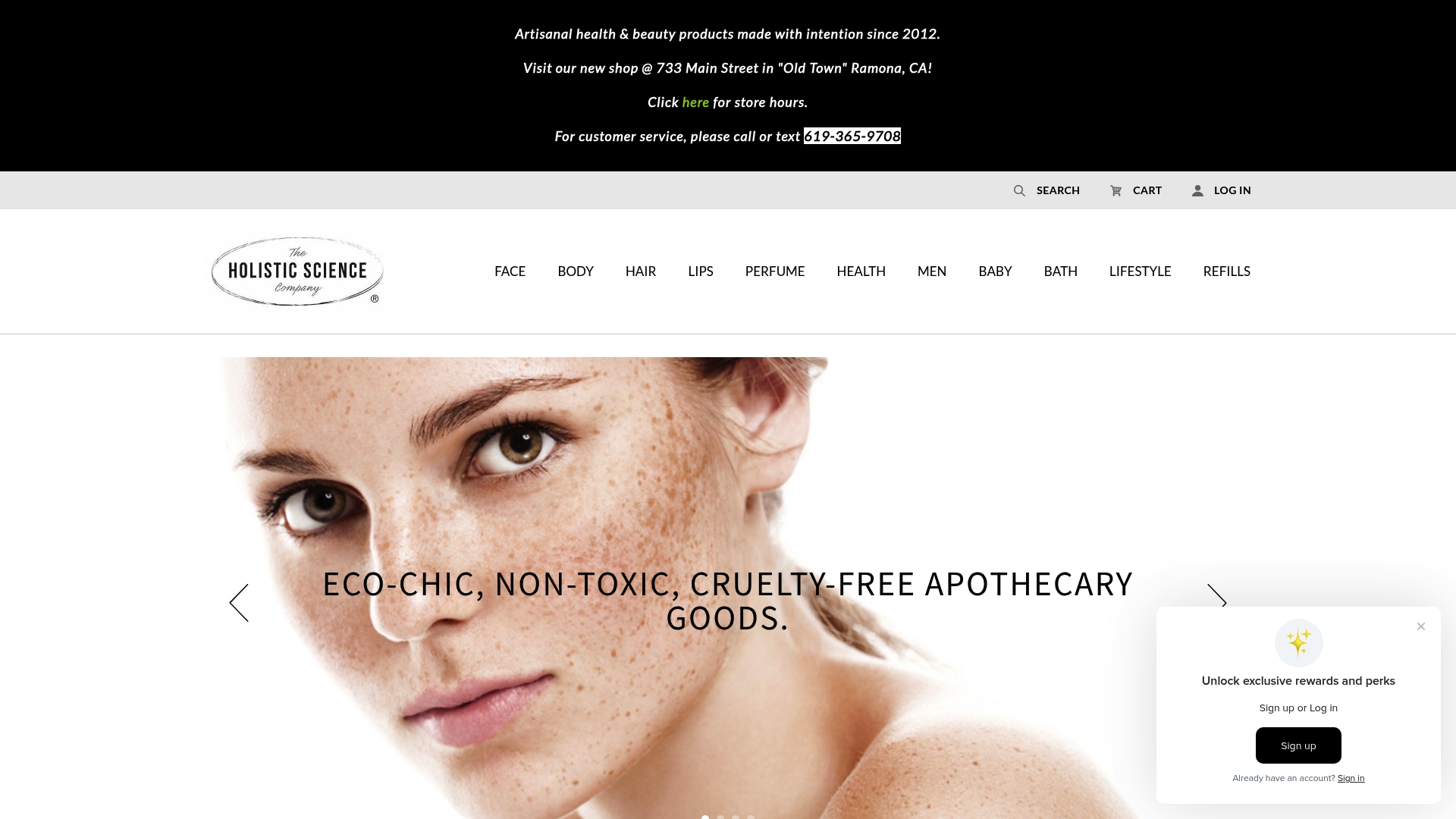
Theholisticscienceco combines artisanal care with genuine ingredient integrity, offering clean beauty skincare that nourishes without compromise. Whether you are looking for a daily moisturizer, a gentle cleanser, or a multi-use treatment, you will find products formulated with the transparency and care that clean beauty actually requires. Explore the full range at Theholisticscienceco and find your new clean routine today.
FAQ
What is the clean beauty definition in simple terms?
Clean beauty refers to products formulated without ingredients known or suspected to harm human health, with a focus on transparency, safety, and ethical sourcing. No universal legal definition exists in the US, so standards vary by brand and retailer.
Are clean beauty products always natural or organic?
No. Clean beauty products can include synthetic ingredients when those ingredients have strong safety profiles. Lab-created compounds are sometimes safer and more consistent than natural alternatives because controlled synthesis reduces contamination risks.
How do I know if a clean beauty brand is greenwashing?
Look for full INCI ingredient lists, credible third-party certifications like Leaping Bunny or ECOCERT, and specific ingredient exclusion policies rather than vague terms like “pure” or “natural.” Brands that cannot show you exactly what is in their products are not meeting the transparency standard that clean beauty requires.
Is clean beauty sustainable?
Sustainability is a core pillar of clean beauty alongside safety and transparency, covering biodegradable packaging, ethical sourcing, and responsible manufacturing. However, not every clean beauty brand prioritizes all three pillars equally, so it is worth evaluating each brand’s environmental commitments separately.
What ingredients should I avoid first when switching to clean beauty?
Prioritize removing parabens, phthalates, synthetic fragrances, and formaldehyde releasers from your highest-exposure daily products like moisturizers and serums. These ingredients carry the greatest cumulative risk because they are applied frequently and left on the skin.
Recommended
- Top 5 Cosmetics Vegan Alternatives 2026 - The Holistic Science Co.
- The Holistic Science Co.
- How Diet Shapes Your Skin Appearance and Glow - The Holistic Science Co.
- Why Men Need Separate Skincare for Better Skin Health - The Holistic Science Co.