
Reduce Facial Redness: A Practical Botanical Routine
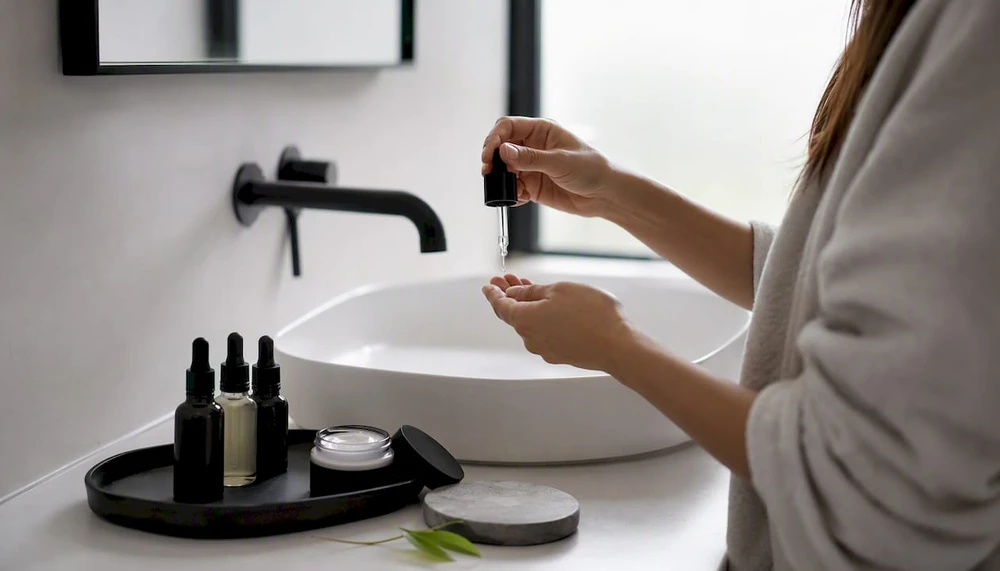
To reduce visible redness and irritation quickly, stop the likely trigger, switch to a pH-balanced cleanser, apply a soothing botanical serum, and use a mineral SPF 30+ daily. That four-step shift, grounded in clean, ingredient-transparent choices, is where real skin change begins.
Start here today:
- Stop using any product with fragrance, denatured alcohol, or harsh surfactants that could be driving the flush
- Switch to a soap-free, pH-balanced cleanser that respects your skin barrier
- Apply a calming botanical serum or moisturizer with colloidal oatmeal, aloe vera, or centella asiatica
- Protect with a mineral SPF 30+ every morning, because UV exposure is one of the most reliable redness triggers
- Track your triggers in a simple diary for one week so you know what to avoid going forward
The American Academy of Dermatology notes that facial redness has many causes, and the right response depends on identifying yours. Theholisticscienceco builds every formula around this same principle: fewer ingredients, cleaner choices, and real botanical support.
Key Takeaways
Switching to a pH-balanced cleanser, a soothing botanical serum, and daily mineral SPF 30+ is the fastest, most evidence-backed way to reduce visible facial redness and irritation.
| Point | Details |
|---|---|
| Start with trigger removal | Stopping the offending product or habit often delivers the biggest single improvement in redness. |
| Four-step routine | Cleanse, treat with botanicals, moisturize, and protect with mineral SPF 30+ every day. |
| Top evidence-backed actives | Colloidal oatmeal, aloe vera, centella asiatica, niacinamide, and azelaic acid have the strongest support. |
| See a dermatologist | Persistent redness lasting more than four to six weeks, papules, or spreading rash needs professional evaluation. |
| The Holistic Science Co. | Ingredient-transparent, botanical formulas designed to support the skin barrier and calm redness without synthetic fragrance. |
Table of Contents
- What does a daily routine look like for redness-prone skin?
- Which botanical actives actually reduce redness and irritation?
- When should you see a dermatologist about facial redness?
- How do you introduce new products without triggering a reaction?
- How do you choose clean, ingredient-transparent products that work?
- How Theholisticscienceco formulates for sensitive and redness-prone skin
- Realistic expectations: what botanical products can and cannot do
- Theholisticscienceco products that align with this routine
- Sources
What does a daily routine look like for redness-prone skin?
A four-step sequence, cleanse, treat, moisturize, and protect, covers the full picture for sensitive, redness-prone skin and keeps your barrier intact.
Step 1: Cleanse (AM and PM). Use a soap-free, pH-balanced cleanser. Soap raises skin pH above its natural 4.5–5.5 range, which weakens the barrier and invites irritation. Look for gentle surfactants like glucosides or betaines. Avoid scrubbing; lukewarm water only.
Step 2: Treat. In the morning, a lightweight serum with niacinamide or centella asiatica calms redness and supports barrier lipids. At night, a barrier-repair oil or serum with evening primrose or flaxseed oil replenishes the fatty acids your skin loses through the day. Skip retinoids and exfoliating acids if your skin is actively inflamed; rebound redness is a real consequence of pushing actives too hard, too fast.
Step 3: Moisturize. Gel textures suit oily or combination skin; cream textures suit dry or sensitized skin. Either way, look for ceramides, colloidal oatmeal, or aloe vera in the first half of the ingredient list. A simplified skincare routine does not need ten products to work.
Step 4: Protect. Daily mineral sunscreen with broad-spectrum protection every morning, rain or shine. StatPearls/NCBI guidance on rosacea specifically recommends daily broad-spectrum mineral sunscreen and flags topical steroids as a trigger for rebound flaring. Zinc oxide and titanium dioxide sit on the skin rather than absorbing into it, making them the gentler choice for reactive skin.
Lifestyle basics that support the routine: Stay hydrated, prioritize seven to nine hours of sleep, and keep a trigger diary noting foods, weather, stress, and products. Diet also plays a measurable role; how diet shapes your skin is worth exploring if redness persists despite a clean product routine.
Which botanical actives actually reduce redness and irritation?
Colloidal oatmeal, aloe vera, centella asiatica, and witch hazel (with caveats) have the most reliable evidence for calming inflamed or reactive skin. Niacinamide and azelaic acid round out the non-botanical options with strong clinical backing.
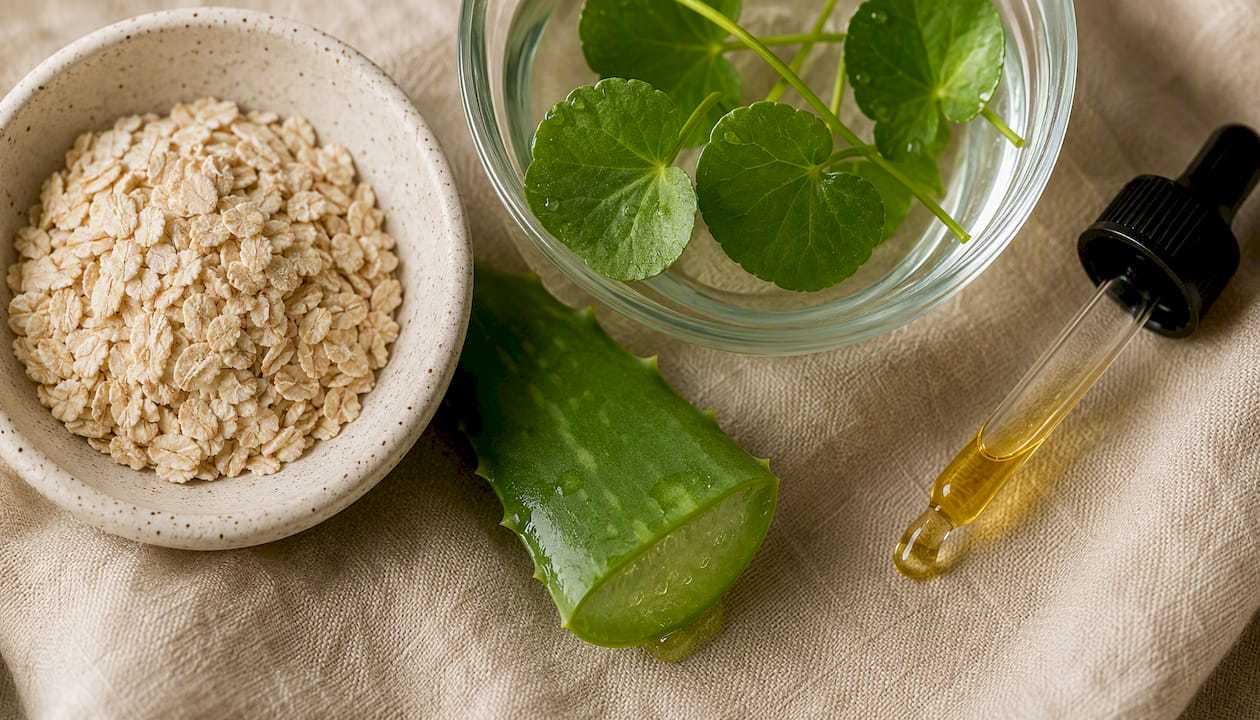
According to PMC research on medicinal plants and inflammatory skin diseases, colloidal oatmeal inhibited inflammatory mediators in vitro and protected against sodium lauryl sulfate-induced irritation in experimental tests. Aloe vera gel reduced acute inflammation in animal models and is widely used for minor skin irritations, though rare contact allergy has been reported.
Evening primrose oil and flaxseed oil, both rich in gamma-linolenic acid (GLA), show evidence for improving atopic dermatitis parameters and supporting barrier lipids. St. John’s wort preparations standardized to hyperforin content showed clinical improvement in mild-to-moderate atopic dermatitis in small trials, though photosensitivity and drug interactions are real concerns worth noting.
| Ingredient | Main evidence-backed benefit | Common formulation types | Key caution |
|---|---|---|---|
| Colloidal oatmeal | Anti-inflammatory, barrier repair | Creams, cleansers, masks | Generally well tolerated; confirm gluten sensitivity context |
| Aloe vera | Soothes acute inflammation | Gels, serums, mists | Rare contact allergy; avoid alcohol-heavy gels |
| Centella asiatica | Barrier support, wound healing | Serums, creams | Usually gentle; test if highly reactive |
| Witch hazel | Reduces UV-induced erythema | Toners, after-sun lotions | Volatile oils may irritate; use distillate, not alcohol-based |
| Evening primrose/flaxseed (GLA) | Barrier lipid support, atopic dermatitis | Facial oils, capsules | Oral vs. topical evidence differs; check with clinician |
| Niacinamide | Reduces redness, minimizes pores | Serums, moisturizers | Very well tolerated at 2–5% |
| Azelaic acid | Anti-inflammatory, anti-redness | Gels, creams | Mild tingling on first use; prescription strengths available |
Concentration and delivery vehicle matter as much as the ingredient itself. Botanical ingredient-transparent products that list the active near the top of the INCI are the ones worth your money.
When should you see a dermatologist about facial redness?
Persistent centrofacial redness, papules, pustules, intense burning, or a spreading rash are signs your skin needs professional evaluation, not just a new serum.
The American Academy of Dermatology lists rosacea, seborrheic dermatitis, atopic dermatitis, psoriasis, drug reactions, lupus, and shingles among the conditions that can cause facial redness. Self-care alone cannot diagnose or treat most of these.
Red flags that warrant a dermatologist visit:
- Redness that has lasted more than four to six weeks without improvement
- Papules or pustules concentrated on the nose, cheeks, or chin
- Intense burning or stinging that worsens with any topical product
- A rash that spreads rapidly or follows a nerve-line pattern (possible shingles)
- Swelling, crusting, or signs of infection
- Redness accompanied by joint pain, fatigue, or a butterfly-shaped facial rash (possible lupus)
A 2017 clinical review on facial erythema stresses that a thorough history, including topical products used, medications, and onset pattern, is the foundation of correct diagnosis. Patch testing, phototesting, or biopsy may be recommended when standard therapies fail.
For confirmed rosacea, the Merck Manual outlines individualized treatment options: topical metronidazole, azelaic acid, or ivermectin for inflammatory lesions; oral antibiotics for pustular disease; and topical brimonidine or oxymetazoline for persistent erythema and flushing. Vascular procedures are an option for treatment-resistant cases. These are prescription-level decisions, not skincare choices.
How do you introduce new products without triggering a reaction?
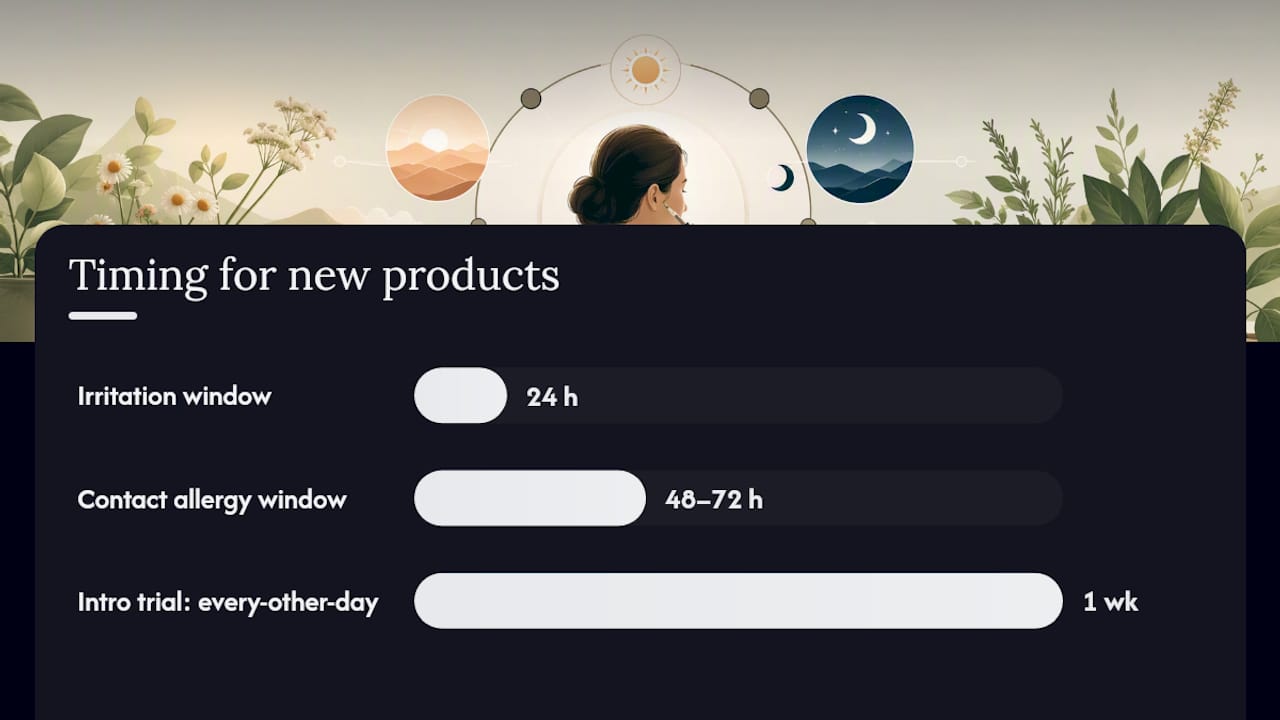
Patch test first, introduce one product at a time, and wait 48–72 hours before drawing any conclusions.
- Choose a test site. Apply a small amount of the new product to the inner forearm or behind the ear, not the face.
- Wait 48–72 hours. Check for redness, itching, swelling, or stinging. A reaction within the first 24 hours often signals irritation; a reaction at 48–72 hours may suggest contact allergy.
- Introduce one product at a time. Adding two or three new products simultaneously makes it impossible to identify the culprit if something goes wrong.
- Start with every-other-day use. Apply the new product every other day for the first week, then daily if your skin tolerates it.
- Document with photos. A quick phone photo at the same angle and lighting each day shows you what is actually changing versus what anxiety is amplifying.
- Stop immediately if you experience burning, significant swelling, or a rash that spreads beyond the application area. Mild tingling that fades within a few minutes is common with actives like azelaic acid; persistent discomfort is not.
Pro Tip: If a new serum causes mild stinging, apply a thin layer of a plain, fragrance-free moisturizer first as a buffer. This “sandwich” method lets your barrier recover while you slowly build tolerance.
How do you choose clean, ingredient-transparent products that work?
Prioritize short ingredient lists, fragrance-free formulas, pH-balanced or soap-free cleansers, and mineral SPF for sensitive or rosacea-prone skin. Those four criteria alone will filter out most of the products that cause more redness than they fix.
Natural skincare ingredient guides can help you read an INCI list with confidence. Here is what to look for and why:
| Shopper criterion | Why it matters |
|---|---|
| Fragrance-free (no “parfum” or “fragrance” on INCI) | Fragrance is a leading cause of contact dermatitis and redness flares |
| Soap-free, pH-balanced cleanser | Preserves the skin’s acid mantle and reduces barrier disruption |
| Mineral SPF (zinc oxide or titanium dioxide) | Sits on skin rather than absorbing; gentler for reactive or rosacea-prone skin |
| Non-comedogenic label | Reduces risk of clogged pores and secondary inflammation in oily skin |
| Short INCI list with hero botanicals near the top | Confirms meaningful concentration of active ingredients |
| No denatured alcohol (SD alcohol, alcohol denat.) | High-concentration alcohol strips barrier lipids and worsens redness |
| Cruelty-free and ethically sourced | Aligns with clean-beauty values and often correlates with better quality control |
One practical buying tip: prefer products built around one or two proven botanicals, such as centella, colloidal oatmeal, or calendula, in a gentle base rather than a long floral cocktail. A product with 22 botanical extracts at trace concentrations is less likely to deliver results than one with centella asiatica at a meaningful level. “Natural” and “clean” are marketing terms with no legal definition in the US; the INCI list is the only honest answer.
How Theholisticscienceco formulates for sensitive and redness-prone skin
The Holistic Science Co. builds every formula around a simple principle: fewer ingredients, cleaner choices, and botanicals that have a real reason to be there.
Formulation principles include short INCI lists, avoidance of synthetic fragrance and denatured alcohol, preference for mineral SPF in sun-protective products, and selection of evidence-backed botanicals like colloidal oatmeal, aloe vera, and plant oils rich in GLA. Facial oils for barrier support are a particular area of focus, given the role of barrier lipids in managing chronic redness and sensitivity.
[Author T’s qualifications and background to be inserted here by the editorial team.]
Realistic expectations: what botanical products can and cannot do
Improvements in irritation and acute redness often show within days of removing the offending trigger and switching to a gentler routine. Chronic redness, texture changes, or barrier damage built up over months typically takes four to eight weeks of consistent care to show meaningful improvement.
Botanical products work best as part of a system: a clean routine, trigger avoidance, and, where needed, clinician-prescribed treatments running alongside your skincare. They are not a replacement for prescription options when those are warranted. If you are using topical metronidazole or azelaic acid prescribed by your dermatologist, a soothing botanical moisturizer and mineral SPF are excellent companions, not competitors.
Pro Tip: Balance is the key word. If you are using an active like niacinamide or azelaic acid, pair it with a calming botanical moisturizer on the same day rather than layering multiple actives. Your skin will thank you for the breathing room.
Systemic inflammation also plays a role. Reducing chronic inflammation naturally through diet, sleep, and stress management supports what you put on your skin from the inside out.
The Holistic Science Co. products that align with this routine
The Holistic Science Co.’s ingredient-transparent formulas are built around the same principles this routine is: short INCI lists, botanical actives with a purpose, and zero synthetic fragrance.
Depending on your skin’s needs, you might reach for a calming botanical serum for the treat step, a barrier moisturizer with colloidal oatmeal or aloe for the moisturize step, or a healing spray for on-the-go soothing throughout the day. Body oils rich in GLA-containing plant oils support barrier repair beyond the face, and the brand’s after-shave tonics and cleansing formulas are built with the same soap-free, low-irritant philosophy.
Visit The Holistic Science Co. to browse the full range and find the products that match your skin type and routine step. If you are unsure where to start, the cleanser and a barrier moisturizer are the two highest-impact choices for most redness-prone skin.
Sources
The clinical and botanical claims in this article are backed by the following authoritative sources, all of which you can read in full:
- Rosacea - StatPearls - NCBI Bookshelf
- Medicinal plants used in treatment of inflammatory skin diseases - PMC
- Rosacea - Dermatology - Merck Manual Professional Edition
- 10 reasons your face is red - American Academy of Dermatology
- Approach to the patient with facial erythema - Dessinioti 2017 review (Cyberderm PDF)
This article provides general skincare information and is not a substitute for professional medical advice. For persistent, worsening, or unclear facial redness, consult a board-certified dermatologist.
Recommended
- Your Simplified Skin Care Routine: 5 Steps That Work - The Holistic Science Co.
- Build a Natural Skincare Routine for Healthy Skin - The Holistic Science Co.
- Plant-Based Botanical Skincare: Pick Ingredient-Transparent Products - The Holistic Science Co.
- Types of Natural Skincare Ingredients: Your Full Guide - The Holistic Science Co.