
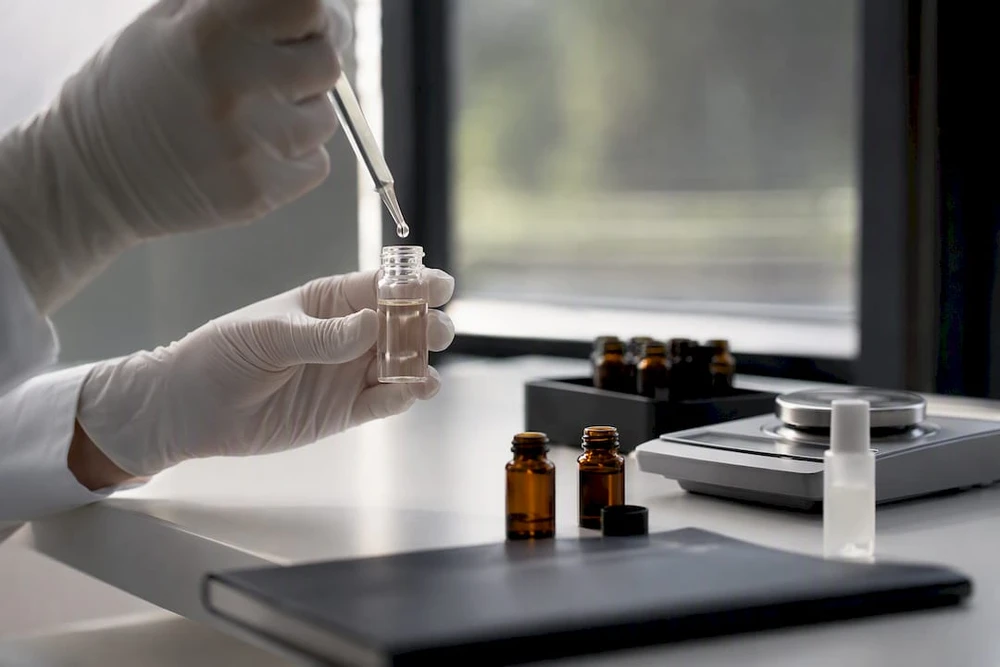
Do Phthalates Hide in Your Fragrance? What to Know Now
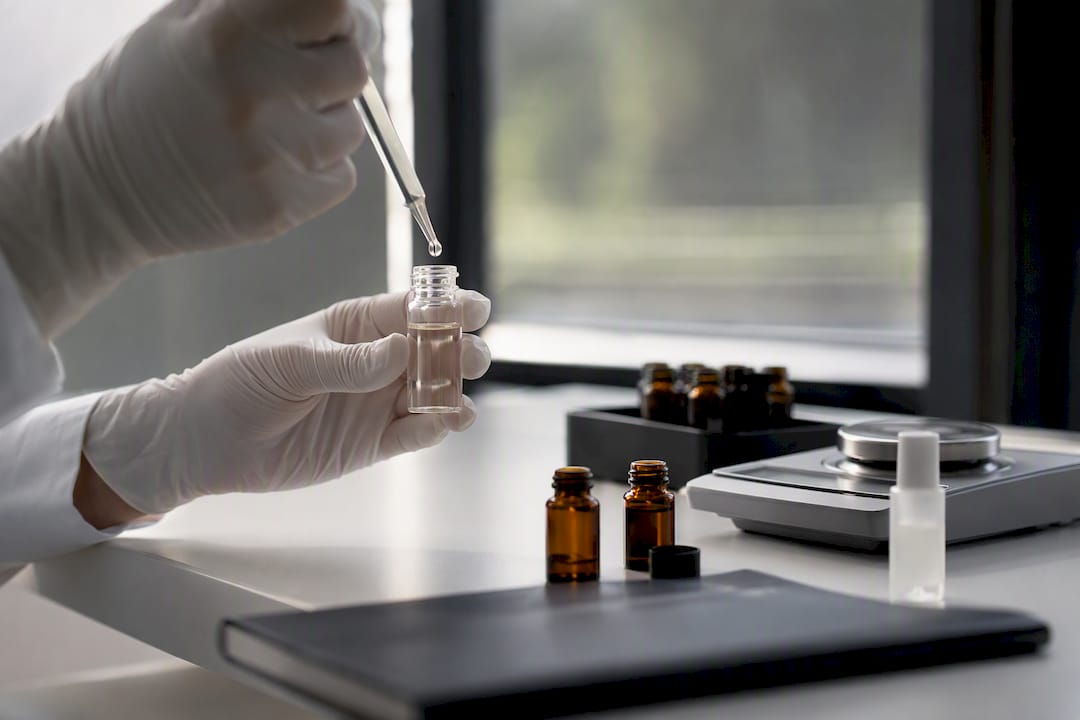
Yes, phthalates can absolutely turn up in fragrance, and diethyl phthalate (DEP) is the one that shows up most often, working behind the scenes as a solvent and fixative that helps a scent cling to your skin longer. Here’s the part that catches people off guard: because “fragrance” is legally protected as a trade secret in the United States, a brand can list phthalates without ever naming them on the label. That gap between what’s in the bottle and what’s on the label is the whole reason this topic deserves your attention.
So what do you actually do with that information today?
- Reach for “phthalate-free” labeling first. It’s the single clearest signal you have when full ingredient disclosure isn’t required.
- Get skeptical of vague “fragrance” listings if zero exposure is your goal, since that word can legally conceal several compounds at once.
- Cut your total daily load of leave-on fragranced products. Layering perfume, lotion, and hair product multiplies exposure more than any single spritz.
A quick number to sit with: advocacy group testing found phthalates present in a majority of fragranced products tested, even when the label made no mention of them. That’s the transparency problem in one data point, and it’s exactly why the rest of this guide exists.
Key Takeaways
Phthalate exposure from fragrance is real but manageable: DEP is the primary phthalate of concern, “fragrance” can legally conceal it, and choosing transparent, phthalate-free brands meaningfully reduces your daily exposure.
| Point | Details |
|---|---|
| DEP is the main concern | It remains the most commonly used phthalate in fragrance, acting as a solvent and fixative. |
| “Fragrance” can hide ingredients | U.S. law lets brands list “fragrance” without naming individual components, including phthalates. |
| Exposure adds up, not just one product | Stacking multiple leave-on fragranced products raises total dermal absorption more than any single item. |
| Your body clears phthalates fast | Short half-lives mean reduced use shows up in urinary metabolites within days, not months. |
| The Holistic Science Co. offers a transparent option | Its fragrances and body care use disclosed, plant-based, phthalate-free formulations in small batches. |
Table of Contents
- Phthalates in Fragrance: What They Are and Which Ones Matter
- Why Perfumers Reach for Phthalates in the First Place
- What Does the Science Say About Phthalates and Health Risks?
- How Much Fragrance Exposure Actually Reaches Your Body?
- What Fragrance Labels Actually Have to Disclose
- How Can You Tell If a Fragrance Contains Phthalates?
- Safer Alternatives: What Replaces Phthalates in Perfumery
- A Practical Checklist for Choosing and Using Fragrance
- How Long Do Phthalates Stay in Your Body?
- How We Evaluate Ingredient Transparency in Fragrance
- Frequently Asked Questions
- Sources
Phthalates in Fragrance: What They Are and Which Ones Matter
Phthalates aren’t one chemical. They’re a family of plasticizers and solvents, related by structure but different in how they behave in a formula and in your body. Some are thick, high molecular weight compounds used to soften vinyl and plastics. Others are thin, volatile, and perfect for carrying scent, which is exactly why perfumers reached for them decades ago.
The FDA has been direct about this distinction: DEP appears to be the primary phthalate still commonly used in cosmetics, while older phthalates like DBP and DMP have largely fallen out of use in personal care formulas. That’s a meaningful shift, but it doesn’t mean the category is closed. Low molecular weight phthalates (LMWP) remain the group to watch in fragrance specifically, because their chemical properties make them useful as fixatives and diluents in a way high molecular weight phthalates simply aren’t.
Here’s a compact breakdown of the names worth recognizing:
| Phthalate | Abbreviation | Typical role in fragrance |
|---|---|---|
| Diethyl phthalate | DEP | Most common; solvent and fixative for aroma chemicals |
| Dimethyl phthalate | DMP | Historically used as a fixative; now rare in cosmetics |
| Dibutyl phthalate | DBP | Once used in nail products and some fragrances; largely phased out |
| Di(2-ethylhexyl) phthalate | DEHP | High molecular weight; rare in fragrance, more common in plastics |
A few things worth remembering as you read an ingredient list:
- DEP is the one that keeps showing up in biomonitoring data tied specifically to fragrance and personal care use.
- “Phthalate-free” on a label is a marketing claim, not a regulatory certification, though it usually reflects a genuine reformulation.
- The absence of DBP or DMP from most modern fragrances is a real win, not a marketing myth. It’s just not the whole story.
Understanding this family distinction matters because a headline that says “phthalates found in perfume” without naming which one is only half the story. DEP and DEHP are not interchangeable in risk profile, use pattern, or regulatory attention.
Why Perfumers Reach for Phthalates in the First Place
Nobody adds phthalates to a fragrance for fun. They solve real formulation problems, and understanding those problems helps you read a product’s performance more accurately.
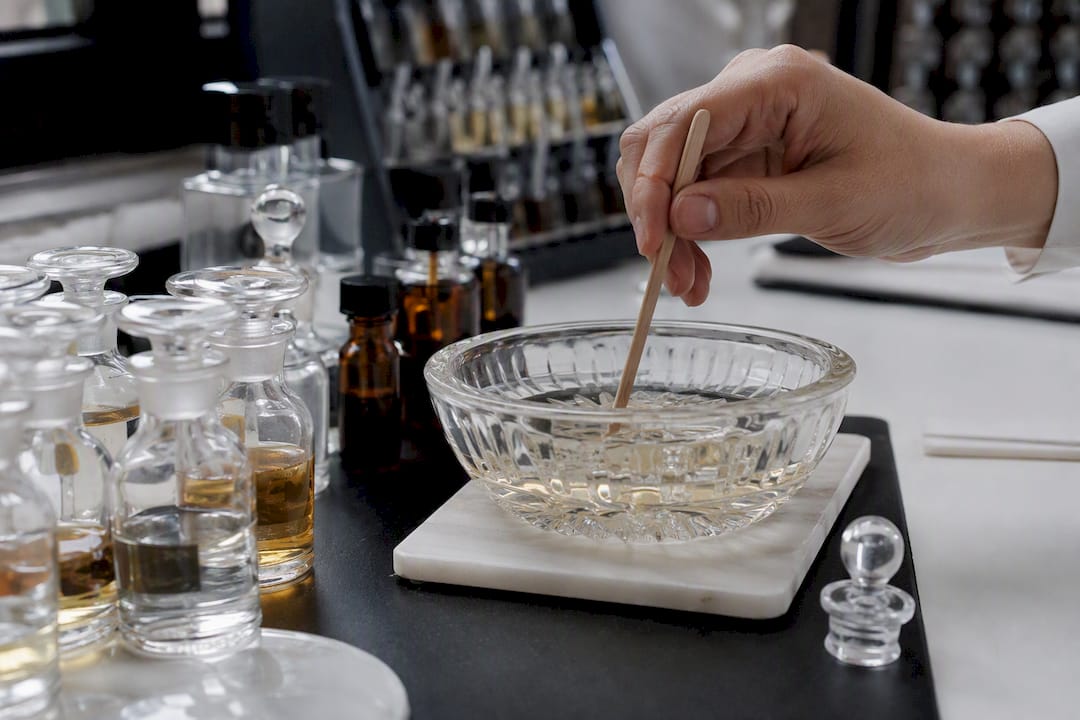
Fragrance oils are volatile by nature. Top notes evaporate first, then heart notes, then base notes, and a poorly stabilized blend can smell brilliant for ten minutes and then vanish. DEP acts as a fixative, slowing that evaporation curve so lighter, more volatile aroma molecules stick around longer on skin or fabric. It also functions as a solvent, helping blend aroma chemicals that wouldn’t otherwise combine smoothly, and it reduces the graininess or uneven evaporation spikes that can make a scent feel unstable.
Three functional roles show up again and again in traditional formulas:
- Solvent: dissolves and evenly disperses aroma compounds that resist blending on their own.
- Fixative: extends how long top and heart notes stay perceptible, stretching a fragrance’s wear time.
- Stabilizer: smooths out the evaporation rate so a scent doesn’t fade in patches.
Pro Tip: If a fragrance smells nearly identical eight hours after application with no shift from top notes to base notes, that flat, unchanging profile can be a sign of a synthetic fixative doing heavy lifting. A fragrance built on natural fixatives like resins tends to evolve more noticeably across the day, since those materials don’t lock the scent profile in place the same way.
That evolving, changing character is actually one of the trade-offs worth knowing. Natural fixatives can smell more complex and alive over time, but they generally don’t hold a scent in place with the same brute-force consistency that DEP offers. That’s the tension every formulator navigates, and it’s the reason phthalate-free perfumery isn’t simply a matter of deleting an ingredient.
What Does the Science Say About Phthalates and Health Risks?
The honest answer is more nuanced than most headlines suggest, and that nuance matters if you want an accurate picture instead of a scary one.
Animal studies form the backbone of concern here. Several phthalates, particularly higher molecular weight compounds like DEHP and DBP, have shown reproductive and developmental toxicity in rodent studies, including effects on hormone signaling and male reproductive development. This is where the term “endocrine disruptor” comes from, and it’s a legitimate finding worth taking seriously.
Human evidence tells a messier story. Epidemiological studies in people are observational, meaning researchers measure exposure and outcomes in real populations rather than controlling variables in a lab. That approach introduces genuine limitations: people are exposed to phthalates through food packaging, indoor dust, medical devices, and personal care products simultaneously, which makes isolating fragrance’s specific contribution difficult. Timing matters too. A single urine sample captures recent exposure, not a lifetime pattern, so studies trying to link phthalate levels to long-term health outcomes are working with an imperfect snapshot.
Recent reporting on the topic captures this tension well: scientific concern about endocrine and metabolic associations has grown substantially in recent years, even as researchers acknowledge the current human evidence has real limitations around causation. The animal data is more consistent than the human data, and that gap is exactly where public health caution and consumer anxiety tend to diverge.
Biomonitoring is where the picture gets more concrete. The CDC’s National Biomonitoring Program has repeatedly detected phthalate metabolites in urine samples across the U.S. population, confirming that exposure is widespread rather than isolated to a small group of heavy fragrance users. That’s not the same as proving harm from fragrance specifically, but it does confirm that exposure is real, ongoing, and measurable at a population level.
Key figures worth knowing:
- Cosmetics, and fragranced products specifically, are identified as a primary source of DEP metabolites in human urine, distinguishing DEP’s exposure profile from phthalates driven mainly by food packaging or industrial sources.
- Historical testing found phthalates present in the majority of fragranced products sampled, frequently in products where the label made no mention of them at all.
- The EPA’s TSCA risk evaluations identified specific risk contexts for phthalates like DBP, DEHP, and DIBP, largely tied to industrial and occupational exposure rather than cosmetic use, which is a useful reminder that not every phthalate finding applies equally to your perfume bottle.
Put together, the evidence supports genuine caution without supporting panic. The clearest, most defensible statement is this: some phthalates disrupt hormone signaling in animal studies, humans are measurably exposed through fragranced products, and the long-term human health consequences of that specific exposure pathway remain an active area of research rather than a settled conclusion.
How Much Fragrance Exposure Actually Reaches Your Body?
Two pathways matter most here: dermal absorption through skin contact and inhalation from sprayed or diffused scent. Leave-on products, the ones you apply and don’t rinse off, drive higher exposure than rinse-off products like shampoo or body wash, simply because they stay in contact with skin longer and give the compound more time to absorb.
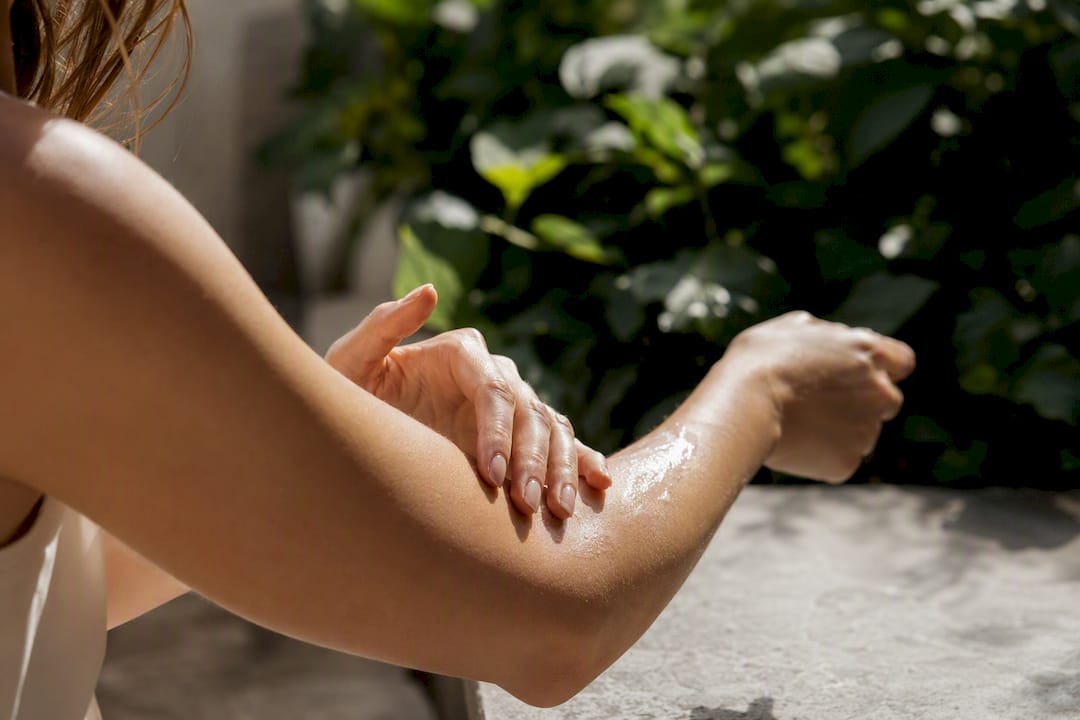
Perfume is the textbook leave-on product. So is body lotion, and so is any scented product you apply and walk away from without washing off. Dermal absorption from these leave-on personal care products is considered a significant contributor to phthalate metabolite levels measured in urine, and that contribution compounds when you’re using several fragranced products in the same routine.
Here’s the part that surprises most people: it’s rarely one product driving high exposure numbers. It’s the stack. Perfume plus scented lotion plus scented hair product plus scented deodorant adds up, because each application contributes its own small dose, and those doses accumulate across a single morning routine.
A few patterns show up consistently in exposure research:
- Frequent, daily users of fragranced leave-on products tend to show higher urinary metabolite concentrations than occasional users.
- DEP’s urinary metabolite, monoethyl phthalate (MEP), tracks specifically with personal care and fragrance use, which is part of why researchers treat it as a useful marker for this exposure pathway in particular.
- Younger individuals and frequent product users, including teens and young adults with elaborate personal care routines, have shown elevated levels in some biomonitoring work, likely tied to product use frequency rather than any biological difference.
The exposure math that matters: it’s not really about whether one perfume “has phthalates.” It’s about total daily load across everything you apply and how long each product stays on your skin. A single spritz of eau de parfum contributes far less than a full routine stacking five or six leave-on fragranced products, each adding its own increment to the total.
What Fragrance Labels Actually Have to Disclose
This is the section that explains why the whole phthalate conversation feels murkier than it should be. The rules governing what a fragrance label must tell you are looser than most consumers assume.
Under current FDA cosmetics regulation, the word “fragrance” can appear on an ingredient list as a single catch-all term, with no requirement to name the individual components inside it. That protection exists because fragrance formulas are treated as trade secrets, similar to a proprietary recipe. A brand doesn’t have to reveal its exact blend to competitors, and by extension, it doesn’t have to reveal it to you either. DEP can sit inside that single word “fragrance” without ever appearing by name.
That’s the practical transparency gap driving most of the confusion around this topic:
- FDA’s role: oversees cosmetic safety broadly but does not require full disclosure of fragrance components on the label.
- EPA’s role: conducted TSCA risk evaluations for several phthalates, but that work centers on industrial exposure and environmental contexts rather than finished cosmetic products on a store shelf.
- CPSIA’s role: banned certain phthalates in children’s toys and childcare articles, a meaningful protection, but one that doesn’t extend to adult fragrances or perfumes at all.
None of these frameworks require a perfume brand to say “contains DEP” on a bottle. That’s exactly why the phrase “phthalate-free” carries real weight when a brand chooses to state it voluntarily.
Pro Tip: Treat “phthalate-free” as meaningful and “unscented” or “fragrance-free” as a different claim entirely. Products can be labeled fragrance-free and still contain masking agents, and products can carry a scent while genuinely excluding phthalates. Read the specific claim, not the general vibe of the label. For a deeper breakdown of what these label terms actually guarantee, see Clean Beauty Label Terms: What They Really Mean.
How Can You Tell If a Fragrance Contains Phthalates?
You can’t smell a phthalate, and you can’t always trust your nose to detect a synthetic fixative versus a naturally long-lasting blend. But you can run a practical checklist before you buy.
- Search for an explicit “phthalate-free” claim on the packaging or product page. This is the single strongest signal available given current labeling law.
- Look for a fully disclosed fragrance ingredient list, rather than the single catch-all word “fragrance.” Brands that publish their aroma chemical components are voluntarily going beyond what’s legally required.
- Contact the brand directly and ask whether their fragrance formulas contain phthalates. A transparent brand will have a clear answer ready; a vague or defensive response is itself useful information.
- Check for independent lab testing or third-party verification. Gas chromatography-mass spectrometry (GC-MS) analysis can detect and quantify phthalates in a finished fragrance, and brands that commission this kind of testing tend to publish or reference the results.
- Notice unusually long, flat wear time as a soft clue, not proof. It’s a formulation hint worth asking about, not a diagnosis.
Pro Tip: When you email a brand asking about phthalates, ask specifically: “Does your fragrance formula contain any phthalates, including DEP?” A generic “our products are safe” reply without a direct yes or no is a dodge worth noting.
Safer Alternatives: What Replaces Phthalates in Perfumery
Phthalate-free doesn’t mean fixative-free. Perfumers have real options, each with its own trade-offs in cost, longevity, and allergen potential.
Natural resins and balsams have been used in perfumery for centuries, long before phthalates existed. Labdanum and benzoin are two classic examples, prized for their warm, amber-like fixative properties that anchor lighter top notes without a synthetic solvent. They bring genuine complexity to a scent’s base, though they can be more expensive to source consistently than lab-made alternatives.
Certain esters and glycols serve as functional substitutes for the solvent role DEP once played, helping blend aroma chemicals without relying on a phthalate structure. Modern synthetic fixatives, developed specifically as non-phthalate replacements, aim to match DEP’s stabilizing performance while sidestepping its regulatory baggage.
A few honest caveats worth sitting with:
- No single alternative perfectly replicates DEP’s specific evaporation-slowing behavior; formulators often blend two or three substitutes to approximate the same effect.
- Natural fixatives aren’t automatically hypoallergenic. Some resins, including labdanum, carry their own sensitization potential for people with fragrance allergies.
- Cost tends to rise with natural, plant-based fixatives, which is part of why phthalate-free formulas sometimes carry a higher price point than conventional fragrance.
Brands solving this well tend to lean on plant-based botanical ingredients sourced with real transparency, disclosing what replaced the phthalate rather than just advertising its absence. That disclosure is the detail worth looking for, more than the phthalate-free claim by itself.
A Practical Checklist for Choosing and Using Fragrance
Reducing your exposure doesn’t require giving up fragrance you love. It requires a few deliberate choices at the point of purchase and in daily use.
At the point of purchase:
- Prioritize brands that explicitly state “phthalate-free” or publish a full fragrance ingredient breakdown.
- Be cautious of a bare “fragrance” listing with no further disclosure if minimizing exposure is genuinely your goal.
- Look for independent lab verification or GC-MS testing referenced on the brand’s site, not just a marketing badge.
In daily use:
- Apply perfume to clothing or hair rather than directly to skin when the fabric allows it, reducing dermal absorption.
- Rotate scents rather than wearing the same fragrance daily, which naturally limits cumulative load from any single formula.
- Limit the total number of fragranced leave-on products stacked in one routine. Perfume plus scented lotion plus scented hair oil adds up fast.
Pro Tip: If a brand claims independent testing, ask what method was used. GC-MS analysis is the recognized standard for detecting phthalates at trace levels, and a brand that can name its testing method is usually one that actually did the testing. Guides like How to Choose Cruelty-Free Beauty Brands use a similar transparency-first framework worth applying here.
How Long Do Phthalates Stay in Your Body?
Here’s some genuinely reassuring news buried in the biomonitoring data: phthalates don’t linger. They’re metabolized quickly and excreted through urine, typically detectable within hours to a couple of days after exposure, and they don’t meaningfully bioaccumulate in tissue the way some other environmental chemicals do.
That rapid turnover is exactly why researchers rely on urinary metabolites for biomonitoring. DEP breaks down into monoethyl phthalate (MEP), and measuring MEP in urine tells you about recent exposure, not lifetime accumulation. A single urine sample is a snapshot, not a running total.
A few practical implications worth understanding:
- Short half-lives mean the ongoing concern is repeated, chronic exposure, not a permanent chemical buildup from a bottle of perfume you wore in college.
- Reducing your fragranced product use should show measurable change in urinary metabolites within a matter of days, not months, based on how quickly the body clears these compounds.
- A single elevated urine test doesn’t prove long-term harm, and a single low test doesn’t prove you’ve avoided exposure entirely. It reflects a narrow window of recent contact.
That distinction reframes the whole conversation: this is about the exposure pattern you maintain over months and years, not a one-time contamination event you need to worry about undoing.
How We Evaluate Ingredient Transparency in Fragrance
Writing accurately about phthalates means holding claims to a real evidentiary standard, not repeating whatever a brand’s marketing copy says. That standard shapes every recommendation in this guide.
Our approach leans on primary sources first: agency guidance from the FDA and EPA, peer-reviewed toxicology summaries like the NCBI StatPearls review on phthalate toxicity, and population-level biomonitoring data from the CDC. When a claim about lab testing comes up, we look for analytical methods like GC-MS behind it, because that’s the standard capable of actually detecting phthalates at trace concentrations in a finished product.
A few principles guide how we vet brand claims specifically:
- We favor brands that disclose full fragrance ingredient lists over those relying solely on the word “fragrance.”
- We treat “phthalate-free” as a meaningful claim only when it’s paired with some transparency about what replaced the phthalate.
- We reference intentional manufacturing practices and sourcing disclosure as trust signals, not just the absence of one flagged ingredient.
- We prioritize primary scientific and regulatory sources over secondary summaries whenever the two disagree.
You can verify any claim in this guide by following the linked primary sources directly. That’s a deliberate choice: a health claim you can’t trace back to its origin isn’t worth trusting, regardless of how confidently it’s written.
Balancing Scent Preferences and Ingredient Caution
Fragrance is genuinely joyful. It marks memory, mood, and identity in a way few other products do, and no amount of ingredient caution should talk you out of wearing something you love. What’s worth changing isn’t your enjoyment of scent. It’s your default assumption that “fragrance” on a label tells you the whole story.
Prioritize transparency over blind trust, patch test a new scent on a small area of skin before committing to daily wear, and think about your cumulative exposure across a full routine rather than agonizing over any single bottle. That’s a reasonable, evidence-grounded middle ground, not an all-or-nothing ultimatum.
If You Want a Phthalate-Free Option, Here’s Where to Start
If reading all of this has you wanting a genuinely simpler answer, here it is: The Holistic Science Co. builds its fragrances and botanical body care around the exact standard this whole guide argues for. Ingredient transparency first, phthalate-free by explicit formulation choice, not by omission or vague marketing language.
Every scented product in the line, from body oils to affirmation candles, is built with disclosed, plant-based ingredients and small-batch formulation instead of the industrial fixatives this guide has spent several sections unpacking. That means:
- Explicit phthalate-free formulation, not a claim buried behind the word “fragrance.”
- Plant-based fixatives sourced with the same transparency standard applied to every other ingredient on the label.
- Small-batch production, which allows tighter quality control than mass-market fragrance lines typically offer.
If the checklist earlier in this guide felt like a lot of homework to run on every bottle in your bathroom, this is the shortcut: visit The Holistic Science Co. and see the full formulation details for yourself before you buy.
Frequently Asked Questions
Are phthalates in fragrance actually harmful? The evidence is mixed rather than settled. Animal studies show reproductive and developmental effects for some phthalates, particularly higher molecular weight compounds, while human studies are limited by mixed exposure sources and short measurement windows. Current reporting emphasizes growing scientific concern alongside real limits in proving direct causation in humans specifically from fragrance.
Are candle fragrances toxic because of phthalates? Some scented candles have historically used fragrance oils containing phthalates as a solvent, similar to perfume formulas. The same labeling gap applies: a candle’s fragrance ingredients aren’t required to be individually listed, so checking for a “phthalate-free” claim is the most reliable way to know.
What does “phthalate-free” actually guarantee? It’s a voluntary brand claim, not a government certification, but it’s meaningful precisely because full fragrance disclosure isn’t legally required. A brand making this claim has typically reformulated to exclude phthalates specifically, though it doesn’t guarantee anything about other ingredients in the formula.
Which phthalate should I be most concerned about in perfume? DEP, or diethyl phthalate, remains the phthalate most consistently linked to fragrance and personal care products in biomonitoring data. Other phthalates like DBP and DMP have largely disappeared from modern cosmetic formulas.
Do phthalates build up in the body over time? No. They’re metabolized and excreted relatively quickly, typically within hours to days, and don’t meaningfully accumulate in tissue the way some other chemicals do. The real concern is repeated daily exposure, not permanent buildup from past use.
How can I find phthalate-free fragrance alternatives? Look for brands using disclosed, plant-based fixatives like labdanum or benzoin instead of synthetic solvents, and prioritize companies willing to publish their full fragrance ingredient list or reference independent lab testing rather than relying on the catch-all word “fragrance.”
This article is general information, not a substitute for advice from a qualified doctor. Consult a qualified healthcare professional about your own circumstances before acting on anything here.
Sources
For readers who want to go deeper into the primary evidence behind this guide:
- Phthalates in Cosmetics | FDA
- Phthalates Toxicity - StatPearls - NCBI Bookshelf
- Phthalates | US EPA
- Safecosmetics
Because regulatory evaluations and biomonitoring data are updated periodically, these sources are worth revisiting rather than treating as a one-time read.
Recommended
- Plant-Based Botanical Skincare: Pick Ingredient-Transparent Products - The Holistic Science Co.
- Clean Beauty Label Terms: What They Really Mean - The Holistic Science Co.
- Intentional Manufacturing in Clean Beauty: What to Look For - The Holistic Science Co.
- What Does Non Toxic Beauty Mean for Your Skin? - The Holistic Science Co.