
What Does Non Toxic Beauty Mean for Your Skin?
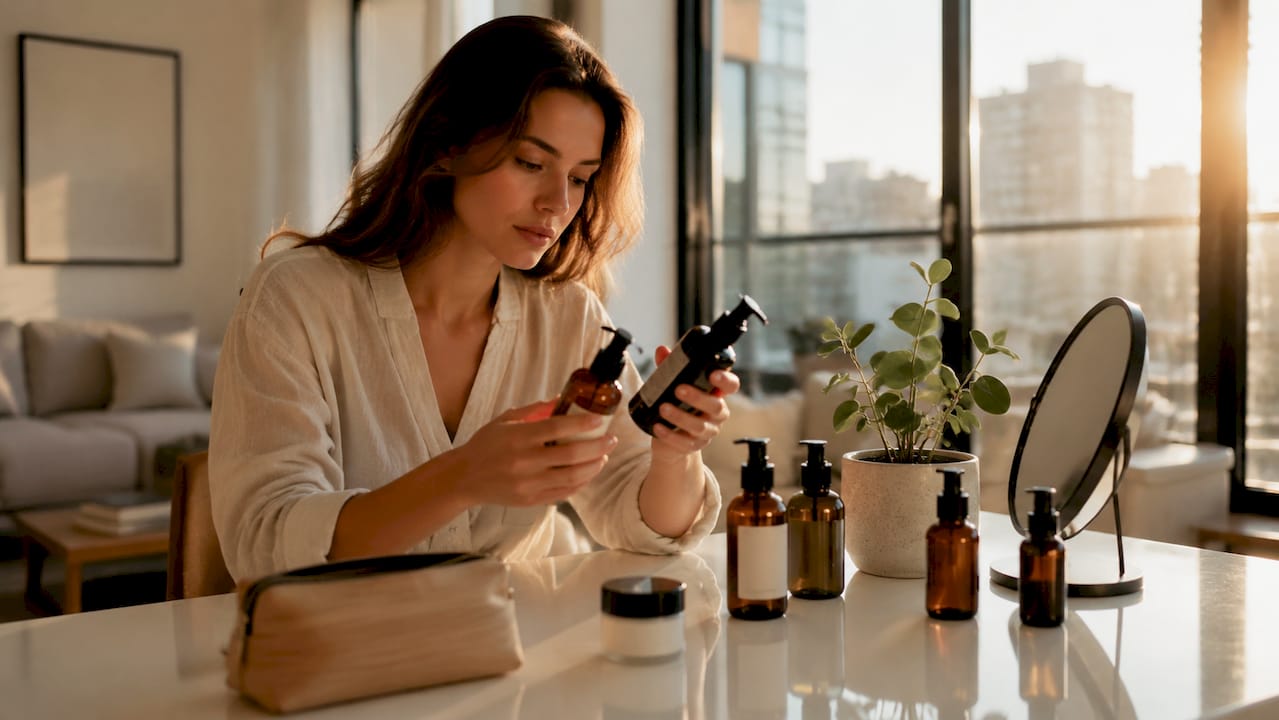
Non-toxic beauty is defined as cosmetics and personal care products formulated to exclude ingredients commonly linked to health concerns, with the goal of reducing your chemical exposure over time. The term is not a regulated or scientific category. It is a marketing and risk-reduction claim used by brands and retailers to signal ingredient transparency. Understanding what does non toxic beauty mean helps you cut through the noise and make smarter choices at the shelf. Retailers like Credo Beauty and The Detox Market have built entire restricted ingredient lists around this concept, screening out parabens, phthalates, and formaldehyde-releasing preservatives before a product earns shelf space.
What does non toxic beauty mean for your ingredient list?
Non-toxic beauty products are defined by what they leave out. The most commonly excluded ingredients include parabens, phthalates, synthetic fragrances, petroleum-based fillers, and formaldehyde donors like DMDM hydantoin and quaternium-15. Each of these has been linked to concerns ranging from hormonal disruption to skin sensitization.
Parabens are preservatives found in moisturizers, shampoos, and makeup. They mimic estrogen in the body, which raises questions about long-term hormonal effects. Phthalates appear in synthetic fragrances and nail polish, and they are associated with reproductive health concerns. Formaldehyde releasers are preservatives that slowly emit formaldehyde, a known carcinogen, into the product over time.

Synthetic fragrances deserve special attention. A single “fragrance” entry on a label can represent dozens of undisclosed chemicals. That opacity is exactly why non-toxic beauty brands either skip fragrance entirely or use named botanical alternatives.
Here is what a non-toxic beauty product typically avoids:
- Parabens (methylparaben, propylparaben, butylparaben)
- Phthalates (often hidden inside “fragrance”)
- Formaldehyde donors (DMDM hydantoin, imidazolidinyl urea)
- Petroleum-based fillers (mineral oil, petrolatum)
- Synthetic fragrance (listed as “parfum” or “fragrance”)
- Sulfates (sodium lauryl sulfate in cleansers)
Pro Tip: Scan the last third of an ingredient list first. Preservatives and fragrance compounds sit at the bottom, and that is where the most controversial ingredients tend to hide.
Why is there no universal definition for non toxic cosmetics?
No federal or international regulatory body has legally defined “non-toxic” for cosmetics. The U.S. Food and Drug Administration regulates cosmetic safety but does not recognize non-toxic as an official product category. The European Union’s Regulation (EC) No 1223/2009 requires that cosmetics be safe under normal use conditions, but it does not create a distinct non-toxic cosmetic class either.
The deeper issue is toxicological. Toxicity is not a fixed property of an ingredient. It depends on dose, frequency of exposure, and the route of entry into the body. This principle traces back to the 16th-century physician Paracelsus:
“The dose makes the poison.”
That quote still defines modern toxicology. Even water is toxic at high enough doses. Retinol, a widely praised skincare ingredient, causes harm at excessive concentrations. So the claim that a product is “non-toxic” is not scientifically precise without specifying which ingredients, at what levels, and under what conditions.
There is also a legal risk for brands. Labeling a product “non-toxic” can imply that competing products are unsafe. Regulators in the U.S. and EU flag unsubstantiated non-toxic claims as potentially misleading. That is why the most credible brands back their claims with published restricted ingredient lists and third-party testing rather than relying on the label alone.
| Standard | Basis | “Non-Toxic” Defined? |
|---|---|---|
| U.S. FDA cosmetics regulation | Safety under intended use | No |
| EU Regulation (EC) No 1223/2009 | Safety under normal conditions | No |
| Credo Beauty Dirty List | Retailer-defined exclusion list | Effectively yes, by brand policy |
| COSMOS Organic certification | Origin and production standards | No |
What does the science say about the benefits of non toxic beauty?
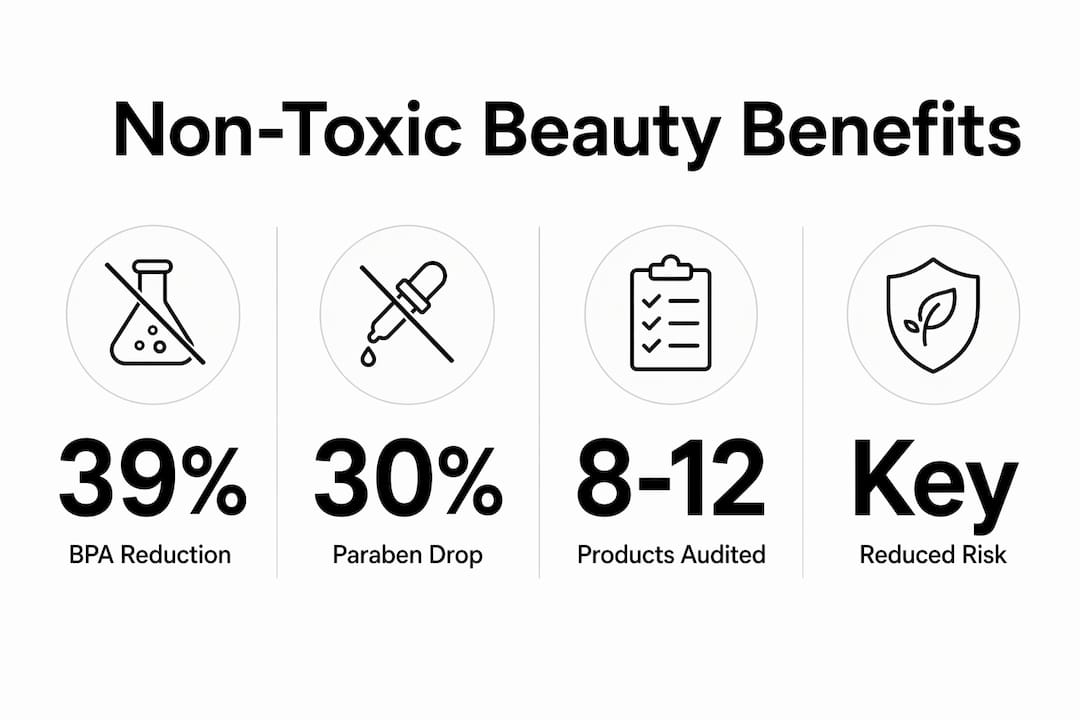
Biomonitoring research gives the clearest picture of what switching to ingredient-screened products actually does to your body. A study tracked women who reduced their use of conventional personal care products and switched to screened alternatives. After just five days, participants showed a 39% reduction in urinary BPA and a 30% reduction in methylparaben levels. That is a measurable drop in endocrine-disrupting chemicals in less than a week.
BPA and parabens are both classified as endocrine disruptors. They interfere with hormonal signaling, which connects to concerns about reproductive health, thyroid function, and metabolic balance. Reducing their presence in your body, even modestly, matters.
The study also revealed something counterintuitive. Routine-wide reductions in the total number of products used produced stronger results than simply swapping one product for a cleaner version. Using fewer products matters as much as using better ones.
The practical benefits of choosing non-toxic beauty products include:
- Lower daily chemical load from skin absorption across multiple product categories
- Faster measurable reductions in biomarkers linked to hormonal disruption
- Reduced cumulative exposure when you simplify your routine across skincare, haircare, and makeup
- Greater ingredient transparency from brands that publish full restricted ingredient lists
Pro Tip: Audit your full routine, not just your moisturizer. The cumulative effect of using eight to twelve products daily adds up fast. Cutting two or three products with questionable ingredients often delivers more impact than finding one perfect clean swap.
How does non toxic beauty compare to clean, natural, and organic?
These four labels overlap constantly, but they mean different things. Non-toxic focuses on ingredient exclusion and risk reduction. Natural and organic focus on where ingredients come from and how they are produced. Clean beauty sits somewhere in between, typically combining ingredient exclusion with a broader wellness philosophy. You can read a deeper breakdown of clean beauty criteria to see how those standards are applied in practice.
None of these terms are strictly regulated in the United States, with the partial exception of organic. The USDA National Organic Program certifies products that meet agricultural production standards, but a product can be labeled “organic” and still contain synthetic preservatives in its non-organic fraction. That gap surprises many shoppers.
| Label | Primary Focus | Regulated? | Key Claim |
|---|---|---|---|
| Non-toxic | Ingredient exclusion and risk reduction | No | Avoids specific harmful ingredients |
| Clean beauty | Ingredient exclusion plus wellness values | No | Free from a defined list of concerning ingredients |
| Natural | Ingredient origin (plant, mineral, animal) | No | Derived from nature, not synthetic |
| Organic | Agricultural production standards | Partially (USDA) | Grown without synthetic pesticides or fertilizers |
Understanding these distinctions protects you from paying a premium for a label that does not deliver what you expect. A product can be 100% natural and still contain ingredients that raise health concerns. Poison ivy is natural. The label tells you the origin, not the safety profile.
How can you choose non toxic beauty products wisely?
Choosing non-toxic beauty products wisely means going beyond the front label and looking at what brands actually disclose. Brands vary widely in the scope and evidence behind their non-toxic claims. Some publish full restricted ingredient lists with testing dates. Others use the term loosely with no supporting documentation.
Follow these steps when evaluating a product:
- Read the full ingredient list. Check for parabens, phthalates, synthetic fragrance, and formaldehyde donors by their INCI names.
- Look for third-party certifications. EWG Verified, COSMOS, and Leaping Bunny each apply different but meaningful standards.
- Check brand transparency. Does the brand publish a restricted ingredient list? Do they share test results or certification sources?
- Simplify your routine. Fewer products mean lower cumulative exposure, regardless of how clean each individual product is.
- Prioritize high-contact products. Leave-on products like moisturizers, serums, and deodorants carry more absorption risk than rinse-off products like shampoo.
Exploring natural skincare ingredients gives you a practical foundation for recognizing what belongs on your skin and what does not. The goal is not perfection. It is informed, consistent reduction.
Key Takeaways
Non-toxic beauty is a risk-reduction claim, not a safety guarantee, and the most meaningful benefits come from reducing your total product load alongside choosing better-screened formulas.
| Point | Details |
|---|---|
| No regulatory definition exists | “Non-toxic” is a marketing term; no U.S. or EU body has legally defined it for cosmetics. |
| Ingredient exclusion drives the claim | Parabens, phthalates, synthetic fragrance, and formaldehyde donors are the most commonly excluded. |
| Biomonitoring confirms real benefits | Switching to screened products cut urinary BPA by 39% and methylparaben by 30% in five days. |
| Fewer products amplify results | Reducing total product use delivers stronger exposure reductions than single product swaps. |
| Label literacy is your best tool | Check restricted ingredient lists, third-party certifications, and test evidence before buying. |
Why I think most non-toxic beauty conversations miss the point
The conversation around non-toxic beauty tends to focus on individual hero ingredients, parabens one week, phthalates the next. That framing keeps you in a loop of product-by-product swaps that never quite feels resolved. What the biomonitoring research actually shows is that volume matters as much as formulation. Using fewer products, even imperfect ones, reduces your chemical load faster than obsessively sourcing the cleanest version of every step in a ten-product routine.
The other thing I have noticed is that the word “non-toxic” does the heavy lifting in marketing while doing very little scientific work. A brand can call a product non-toxic without disclosing which ingredients it excluded, at what concentrations, or based on what evidence. That is not transparency. It is a label. The brands worth trusting are the ones that publish their restricted ingredient lists, name their certifications, and update their testing dates. Credo Beauty’s Dirty List and EWG’s Verified standard are two benchmarks that actually require documentation.
My honest take is this: non-toxic beauty is a useful starting point, not a destination. Use it to filter out the most concerning ingredients, simplify your routine, and demand transparency from brands. But do not let the label replace your own reading of the ingredient list. That skill is worth more than any certification.
— T
Theholisticscienceco and the non-toxic beauty difference
At Theholisticscienceco, ingredient transparency is not a marketing afterthought. Every formulation is built around the principle of reducing your exposure to questionable ingredients while still delivering products that genuinely nourish and soothe your skin.
Theholisticscienceco crafts artisanal health and beauty products with the same care you bring to reading labels. If you are ready to build a routine grounded in real ingredient awareness, explore the full collection and see what thoughtful formulation actually looks like. Each product reflects a commitment to the kind of transparency that makes the non-toxic label mean something real.
FAQ
What does non toxic beauty mean exactly?
Non-toxic beauty refers to cosmetic products formulated to exclude ingredients commonly linked to health concerns, such as parabens, phthalates, and synthetic fragrance. The term is a marketing claim, not a regulated category, so its scope varies by brand.
Is non toxic makeup actually safe to use?
Non-toxic makeup reduces exposure to specific flagged ingredients but does not guarantee zero risk. Toxicity depends on dose and exposure, so even screened products should be evaluated by their full ingredient list and testing evidence.
How is non toxic skincare different from natural skincare?
Non-toxic skincare focuses on excluding ingredients with known or suspected health risks. Natural skincare focuses on ingredient origin, meaning plant or mineral derived, which does not automatically make a product safer or free from concerning compounds.
Do non toxic beauty products really reduce chemical exposure?
Yes. Biomonitoring research showed a 39% reduction in urinary BPA and a 30% drop in methylparaben levels after just five days of using ingredient-screened products, confirming that switching products produces measurable results quickly.
How do I verify a brand’s non toxic claims?
Check whether the brand publishes a restricted ingredient list, names its certifications such as EWG Verified or COSMOS, and provides dated test results. Brands without documentation are using the term as a marketing signal, not a substantiated claim.
Recommended
- What Is Clean Beauty? Your 2026 Ingredient Guide - The Holistic Science Co.
- Small Batch Beauty Products Explained: What You Need to Know - The Holistic Science Co.
- Types of Natural Skincare Ingredients: Your Full Guide - The Holistic Science Co.
- The Holistic Science Co.