

The Best Body Oil for Stretch Marks: A Pregnancy Guide

Body oils can genuinely help your skin feel more comfortable, stay supple, and may modestly reduce the visibility of early stretch marks — but they work best as prevention, not removal. The honest answer is this: if you’re in early pregnancy or noticing the first red or purple marks forming, a daily stretch marks body oil routine gives you the best shot at keeping skin nourished and resilient. Once marks mature to white or silver (striae albae), topical oils alone are unlikely to make them disappear. Mayo Clinic confirms that no topical product has been proven to consistently prevent stretch marks, and that gradual, healthy weight gain remains the clearest prevention strategy during pregnancy.
- Early marks (striae rubrae): Red or purple in color, still in the inflammatory phase — most responsive to topical care and massage.
- Mature marks (striae albae): White or silver, indicating the dermis has remodeled — topicals can soften and hydrate but rarely erase.
- Best micro-action: Start gentle daily massage with a pregnancy-safe carrier oil as soon as your skin begins to stretch. If you’re pregnant, check with your provider before adding any new topical, especially essential oils.
Pro Tip: Begin your oil routine in the first trimester, not the third. The earlier you start supporting skin elasticity, the more time the oil and massage have to work with your skin’s natural repair cycle.
Key Takeaways
Body oils work best as a daily prevention tool for early stretch marks, with massage technique and consistency mattering as much as the specific oil you choose.
| Point | Details |
|---|---|
| Early marks respond best | Red or purple striae rubrae are most responsive to topical oils and massage; mature white marks are unlikely to disappear with oils alone. |
| Massage amplifies the benefit | Circular massage increases blood flow and skin suppleness; some trial authors attribute part of the benefit to the mechanical action itself. |
| Sweet almond oil has trial support | A 2025 meta-analysis of 12 RCTs found an OR of 0.47 for reduced stretch-mark incidence with herbal products including sweet almond oil. |
| Essential oils need caution in pregnancy | Dilute to 1% or below during pregnancy, avoid uterotonic oils entirely, and always consult your provider before use. |
| The Holistic Science Co. | Offers ingredient-transparent botanical body oils formulated for daily massage use, with clean labeling suited to pregnancy and postpartum care. |
Table of Contents
- How does a stretch marks body oil actually work on your skin?
- Which oils are most commonly recommended for stretch marks?
- How to apply body oil for stretch mark prevention
- What’s safe to use during pregnancy, and what should you avoid?
- What results can you realistically expect, and how long does it take?
- What do medical authorities actually say about oils and stretch marks?
- How to choose the right body oil for your skin
- A simple daily routine with Theholisticscienceco’s recommended body oil
- Why Theholisticscienceco takes a safety-first approach to botanical skincare
- Theholisticscienceco body oil: clean ingredients, pregnancy-aware formulation
- Sources
How does a stretch marks body oil actually work on your skin?
The core mechanism is simpler than most marketing copy suggests. Oils hydrate the stratum corneum (your skin’s outermost layer), reduce transepidermal water loss, and make the skin more pliable. That pliability matters because skin that stretches gradually and stays moisturized is less likely to itch intensely or develop the micro-tears that become visible marks.
Emollient and occlusive oils form a light barrier on the skin surface, sealing in moisture and soothing the itching that often accompanies rapid stretching. That itch relief alone is worth the routine for many pregnant women. Beyond hydration, the act of massaging oil into your skin increases local blood flow and may improve perceived elasticity, and some study authors attribute a portion of the benefit to the mechanical action of massage itself rather than to any single ingredient.
Here’s where realistic expectations matter:
- What oils can do: Hydrate, soothe itch, support skin suppleness, and make daily massage comfortable and consistent.
- What oils cannot reliably do: Repair ruptured collagen and elastin fibers deep in the dermis — which is the structural root cause of stretch marks.
- Where genetics fits in: Skin elasticity is partly genetic. If your mother had significant stretch marks during pregnancy, your risk is higher regardless of which oil you use.
- Rapid weight change: Fast stretching overwhelms even well-hydrated skin. Gradual, steady growth gives topical care the best chance to keep up.
Stretch marks affect a large proportion of pregnant women, and the NHS notes there is very little evidence that creams or oils reliably prevent them. That’s not a reason to skip oils — it’s a reason to use them with clear expectations and pair them with lifestyle strategies like staying hydrated, eating omega-3-rich foods, and supporting your skin from the inside out.
Which oils are most commonly recommended for stretch marks?
Several oils show up consistently in both clinical trials and practitioner recommendations. The differences come down to fatty-acid profile, absorption speed, antioxidant content, and scent. Here’s a practical breakdown of each, including what it does best for stretch-mark care.
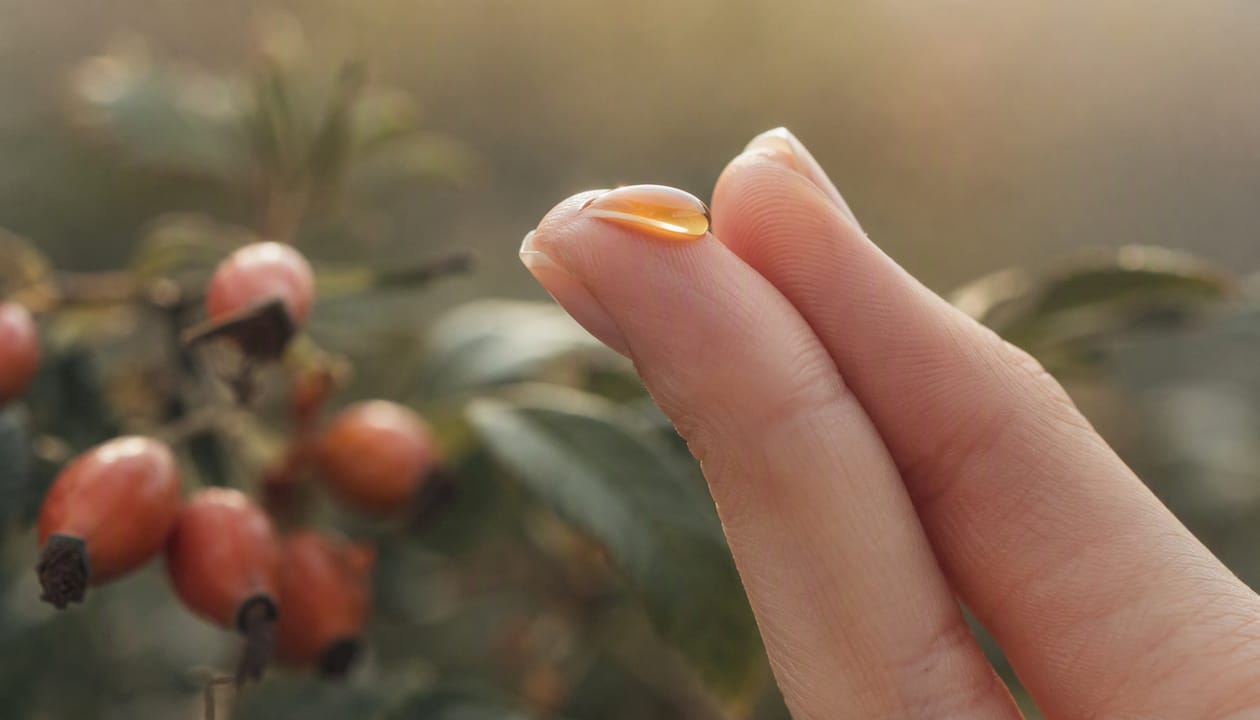
Rosehip oil
Rich in linoleic acid and naturally occurring retinoids, rosehip is one of the most studied oils for skin regeneration. It absorbs relatively quickly and works well blended with a lighter carrier for daily use.
Jojoba oil
Technically a liquid wax, jojoba closely mimics the skin’s natural sebum. It’s lightweight, non-comedogenic, and extremely stable, making it an excellent everyday carrier. Use it as the base of a blend or on its own for a non-greasy daily massage.
Sweet almond oil
Mild, nourishing, and high in oleic and linoleic acids. A 2025 systematic review found sweet almond oil was among the herbal remedies associated with reduced incidence of pregnancy striae in randomized trials, though the authors noted study heterogeneity. It’s gentle enough for sensitive skin and widely considered safe in pregnancy as a carrier.
Argan oil
High in vitamin E and oleic acid, argan is often called “liquid gold” for good reason. Healthline summarizes small studies suggesting argan oil may improve skin elasticity, making it a solid choice for targeting early marks. It’s a bit richer than jojoba, so a few drops go a long way.
Marula oil
Lightweight and fast-absorbing, marula is packed with oleic acid and antioxidants. It sinks into skin quickly without a greasy finish, which makes it particularly pleasant for belly massage during pregnancy when skin is already sensitive and warm.
Castor oil
Thick and deeply occlusive, castor oil is best used in small amounts mixed into a lighter carrier. Its high ricinoleic acid content gives it anti-inflammatory properties.
Coconut oil
One of the most popular home remedies, coconut oil is moisturizing and has a pleasant scent. However, the AAD notes that common home remedies including almond oil, cocoa butter, and vitamin E often fail in clinical trials for stretch-mark prevention specifically. Coconut oil is still a reasonable moisturizer and massage medium, just not a proven preventive on its own.
Lavender (essential oil)
Lavender is an essential oil, not a carrier, which means it must always be diluted before skin contact. It has calming, anti-inflammatory properties and can be added to a carrier blend for scent and mild soothing benefit. Pregnancy safety for lavender is debated — consult your provider before using any essential oil during pregnancy.
Carrier vs. essential oils at a glance:
- Carrier oils (jojoba, sweet almond, argan, marula, rosehip, castor, coconut): used directly on skin, safe for daily use, form the base of any blend.
- Essential oils (lavender and others): highly concentrated plant extracts that must be diluted to 1–2% in a carrier; require extra caution in pregnancy.
Skip essential oils entirely during pregnancy unless your provider has cleared them. Learn more about natural skincare ingredients to understand what each component brings to a blend.*
How to apply body oil for stretch mark prevention
Start when your skin begins to stretch, not after marks have already formed. For pregnancy, that often means the end of the first trimester or early second trimester. Consistency matters far more than the specific oil you choose.
- Cleanse gently. Shower or bathe with a mild, fragrance-free wash. Pat skin dry, leaving it slightly damp — damp skin absorbs oil more readily.
- Warm the oil. Pour a small amount into your palms and rub them together for 5–10 seconds. Warm oil spreads more easily and feels more comfortable on the skin.
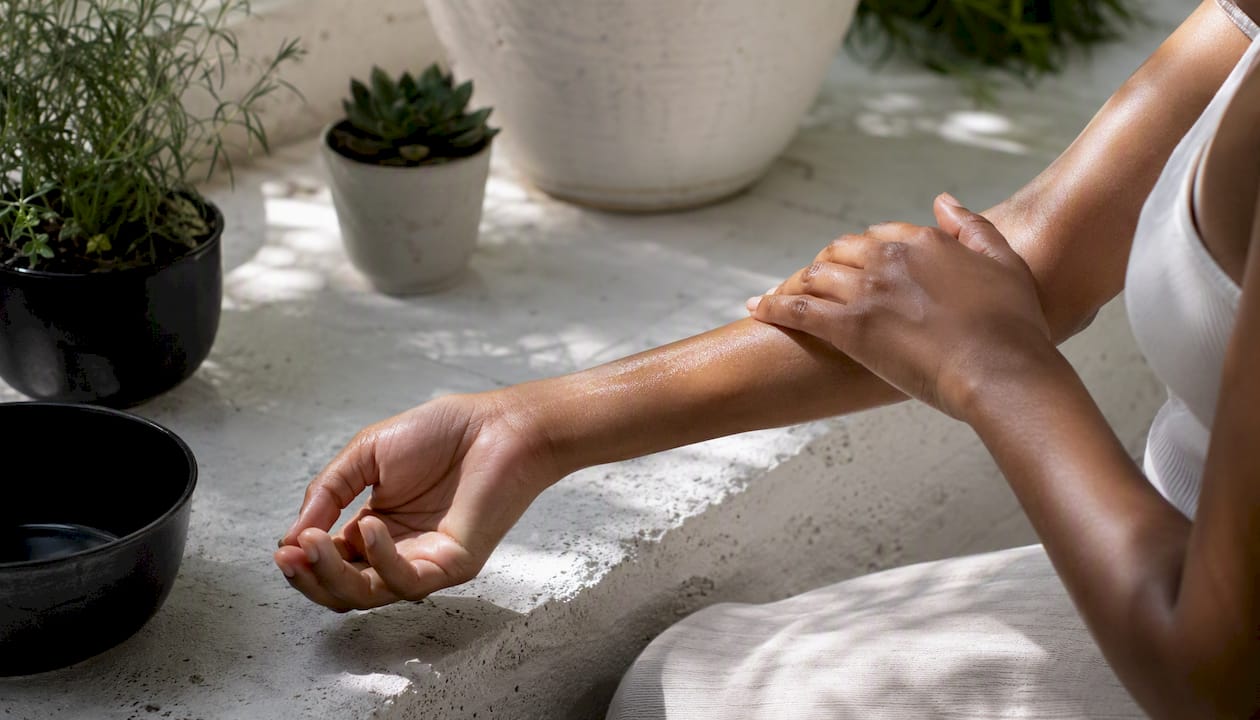
- Apply to target areas. Focus on the abdomen, breasts, hips, and inner thighs — the areas most prone to stretch marks during pregnancy. For the abdomen, a nickel-sized amount of oil is usually sufficient; thighs and hips may need slightly more.
- Massage with circular strokes. Use gentle, circular upward motions with light pressure. Think of it as coaxing the skin rather than working out a knot. Avoid aggressive rubbing, especially on itchy or irritated skin.
- Continue for 2–5 minutes per area. You don’t need a long session — short, consistent daily massage is more effective than an occasional deep treatment.
- Let it absorb. Give the oil 5–10 minutes to sink in before dressing. Bedtime application works beautifully here because you’re not rushing.
Timing options:
- Post-shower: Skin is warm and slightly damp, maximizing absorption. Works well as a morning habit.
- Bedtime: Oils have hours to absorb undisturbed. Particularly good for thicker blends with castor oil.
For sensitive or itchy skin, reduce pressure even further and use a lighter oil like jojoba or marula. If the itch is intense, the oil itself is soothing — just be gentle. Fitting this into a simplified daily skin care routine makes it easier to stay consistent.
Pro Tip: Take a photo of the areas you’re treating every two weeks in the same lighting. It’s the most honest way to track whether early red marks are fading or holding steady — and it helps you track your skincare routine progress with real evidence rather than memory.
What’s safe to use during pregnancy, and what should you avoid?
Many carrier oils are considered pregnancy-safe, but essential oils are a different story. “Natural” does not automatically mean safe during all trimesters, and some plant-derived compounds are potent enough to cause real concern.
Carrier oils generally considered safe in pregnancy:
- Jojoba, sweet almond, argan, marula, rosehip, coconut — all widely used without reported concerns at normal topical amounts.
- Castor oil applied topically in small amounts as part of a blend is generally considered low-risk, though avoid large amounts near the end of pregnancy.
Essential oils to approach with caution or avoid:
- Clary sage, rosemary, juniper berry, thyme, oregano: commonly flagged as potentially uterotonic or high in terpene content; generally advised to avoid during pregnancy.
- Peppermint: sometimes avoided in the first trimester and during breastfeeding.
- Lavender and chamomile: often considered lower risk but still warrant provider consultation, particularly in the first trimester.
- Any essential oil blend without clear ingredient disclosure: avoid entirely.
Healthline notes that safety data for essential oils in pregnancy is limited, and that essential oils must always be diluted in a carrier before skin contact.
Additional safety checks:
- Patch test every new oil. Apply a small amount to the inner forearm, wait 24 hours, and check for redness, itching, or swelling before using on larger areas.
- Discontinue if a rash or intense itching develops. Some itching during pregnancy is normal skin stretching; a rash or hives is a different signal.
- Retinoids are not safe in pregnancy. Topical tretinoin and other prescription retinoids must be avoided. The AAD notes that tretinoin has shown benefit for early stretch marks in studies, but it is contraindicated during pregnancy and breastfeeding. Save it as a post-pregnancy option if desired, under dermatologist guidance.
- Always consult your prenatal care provider before introducing any new topical product, especially if you have a high-risk pregnancy or sensitive skin.
What results can you realistically expect, and how long does it take?
The timeline depends almost entirely on whether you’re working with early (red) marks or mature (white) ones.
Early striae rubrae (red or purple marks):
- Itch relief can come within days to a week of consistent oiling and massage.
- Color fading and slight textural softening may be noticeable over weeks to a few months with daily use.
- Subset analyses in the systematic review reported significant reductions in itching and erythema with herbal topical products, which means symptom improvement is a realistic and meaningful goal even when full prevention isn’t guaranteed.
Mature striae albae (white or silver marks):
- Topical oils will keep the skin hydrated and may soften the texture slightly over months of use.
- Full disappearance is unlikely with oils alone. The AAD explains that stretch marks are a form of scarring from dermal fiber rupture and that they often fade naturally over time regardless of treatment.
- For more significant improvement of mature marks, dermatologic options like laser therapy, microneedling, or tretinoin (post-pregnancy) are more likely to produce structural change. If you’re considering these, a consultation with a dermatologist or an aesthetic treatment provider can help you understand what’s available.
Concrete signals of progress to watch for:
- Reduced itching and skin tightness within the first 1–2 weeks.
- Marks shifting from deep red or purple toward a lighter pink over 4–8 weeks.
- Slight softening of texture in early marks after 2–3 months of consistent use.
- Mature marks may appear slightly less raised or rough after several months of hydration.
If you’ve been consistent for 3–4 months and see no change in mature marks, that’s a reasonable point to discuss medical options with a dermatologist.
What do medical authorities actually say about oils and stretch marks?
The evidence picture is nuanced, and the most trustworthy sources are worth reading directly.
The NHS similarly notes that there is very little evidence creams or oils reliably prevent stretch marks, and points to weight management as the clearest lever. For non-pregnant patients, the NHS mentions that some treatments — retinoids, hyaluronic acid, laser — may improve appearance, though none are suitable during pregnancy.
The most encouraging trial-level data comes from a 2025 systematic review and meta-analysis of herbal remedies for pregnancy striae. That’s a meaningful signal. The authors were careful to note study heterogeneity and called for better-designed trials before drawing broad conclusions.
A peer-reviewed PMC review of topical and procedural approaches reinforces that trial heterogeneity is a recurring limitation across this body of research, and that massage itself may contribute to outcomes independently of the specific oil used.
Evidence tiers at a glance:
- Randomized trial support (limited but present): Sweet almond oil, sesame oil, Aloe vera, hyaluronic acid (non-pregnancy), tretinoin (non-pregnancy).
- Small study or mechanistic support: Rosehip, argan, gotu kola for elasticity.
- Widely used but weak trial evidence: Cocoa butter, olive oil, vitamin E, coconut oil.
The honest takeaway is that oils are not a guaranteed fix, but they’re also not useless. For early marks, consistent use with massage gives you a real, evidence-informed chance at improvement.
How to choose the right body oil for your skin
The ingredient label tells you almost everything you need to know. A good stretch-mark body oil should have a short, readable list of recognizable botanical ingredients, with carrier oils listed first (they make up the bulk of the formula) and any actives or essential oils listed further down.
What to look for:
- Single-origin carrier oils (jojoba, sweet almond, rosehip, argan) as primary ingredients.
- Active botanicals like gotu kola extract or topical hyaluronic acid if you’re targeting early marks and not pregnant.
- Pregnancy-safe labeling or clear disclosure of all ingredients so you can verify with your provider.
- Cruelty-free and transparency claims, which often correlate with cleaner formulation practices.
- Dark glass packaging — many botanical oils oxidize when exposed to light and air, losing potency faster in clear plastic bottles.
Red flags to avoid:
- Long lists of synthetic fragrance compounds or undisclosed “parfum.”
- Mineral oil as the primary ingredient (occlusive but adds no botanical benefit).
- Vague “proprietary blend” language with no ingredient breakdown.
- Essential oils listed without dilution guidance, especially on products marketed for pregnancy.
Price and formulation reality: Premium botanical extracts like rosehip and marula can justify a higher price point because cold-pressing and sourcing quality plant material costs more. That said, a simple, high-quality jojoba or sweet almond oil is genuinely effective for hydration and massage without the premium price. Complexity doesn’t always mean better results.
Quick decision flow:
- Pregnant or sensitive skin: Choose a single carrier oil or a simple blend with clear pregnancy-safe labeling. Skip essential oils unless your provider has cleared them.
- Postpartum or non-pregnant, targeting early marks: Look for rosehip or argan as primary actives, or formulas that include hyaluronic acid for added hydration depth.
- Targeting mature marks: Oils will help with comfort and texture; consider consulting a dermatologist for additional options.
Understanding how to layer skincare products correctly will also help you fit your body oil into a broader routine without layering conflicts.
A simple daily routine with The Holistic Science Co.’s recommended Intense Nourishing Cocoa Butter, Scar & Stretch Mark Cream
A two-step daily routine is all you need: cleanse, then apply and massage. That’s it. The magic is in the consistency, not the complexity.
Daily routine at a glance:
- Morning (post-shower): Apply a small amount of oil to warm, slightly damp skin. Massage in gentle circular strokes for 2–5 minutes on the abdomen, breasts, hips, and thighs. Let absorb before dressing.
- Evening (optional, bedtime): A second application at night gives the oil hours to work undisturbed. Particularly useful during rapid growth phases in the second and third trimesters.
- Sensitive skin adaptation: Use a lighter carrier like jojoba or marula, reduce pressure during massage, and avoid any essential oil components until after pregnancy.
- Breastfeeding note: Keep oils away from the nipple and areola area, and choose fragrance-free formulas to avoid any contact with your baby.
The Holistic Science Co.’s body products are formulated with ingredient transparency at the core — botanical carrier oils, no unnecessary synthetic additives, and clear labeling so you know exactly what you’re putting on your skin. The antioxidant-rich carrier oil base supports the daily massage routine described throughout this guide, and the clean formulation makes it a natural fit for pregnancy and postpartum use. Check the full ingredient list on the product page before use, and consult your prenatal provider if you have any questions about specific ingredients.
Pro Tip: Store your body oil in a cool, dark place away from direct sunlight. Many botanical oils, especially rosehip, oxidize faster when exposed to heat and light — dark glass packaging and proper storage protect the oil’s potency and extend its shelf life.
Why The Holistic Science Co. takes a safety-first approach to botanical skincare
At The Holistic Science Co., we believe that knowing what’s in your skincare is not a luxury — it’s a baseline. Botanical skincare works best when it’s formulated with purpose: the right carrier oils chosen for their fatty-acid profiles, actives selected for evidence-informed reasons, and nothing added just to fill a label. That philosophy matters most during pregnancy and postpartum, when your skin is changing rapidly and the stakes of using the wrong ingredient are real. We prioritize pregnancy-safe formulations, full ingredient disclosure, and the kind of straightforward guidance that helps you make confident choices for yourself and your baby. Visit our product pages for complete ingredient breakdowns, and explore our educational resources whenever you want to go deeper on what a specific botanical actually does.
The Holistic Science Co. body oil: clean ingredients, pregnancy-aware formulation
The Holistic Science Co.’s body oil delivers exactly what this guide recommends: a clean, botanically grounded formula built on antioxidant-rich carrier oils, with full ingredient transparency and no synthetic additives that could complicate pregnancy safety.
Why it fits this guide’s criteria:
- Formulated with botanical carrier oils chosen for their fatty-acid and antioxidant profiles.
- Ingredient-transparent labeling — no hidden “fragrance” or proprietary blends.
- Designed for daily massage use, making it easy to build the consistent routine that matters most.
Visit The Holistic Science Co. to view the full ingredient list, check pregnancy-safe guidance, and add it to your routine today.
Sources
These are the primary sources behind this guide — worth bookmarking if you want to read the evidence directly.
- Stretch marks - Diagnosis and treatment - Mayo Clinic
- Stretch marks - NHS
- The effectiveness of herbal remedies in preventing striae gravidarum: A systematic review and meta-analysis
- Stretch marks: Why they appear and how to get rid of them - AAD
Consult your clinician or midwife for personalized advice, especially if you’re pregnant, breastfeeding, or have a skin condition that could affect how your skin responds to topical oils.
This article is general information, not a substitute for advice from a qualified doctor. Consult a qualified healthcare professional about your own circumstances before acting on anything here.
Recommended
- Why Women Use Facial Oils Nightly: 2026 Guide - The Holistic Science Co.
- Types of Natural Skincare Ingredients: Your Full Guide - The Holistic Science Co.
- Plant-Based Botanical Skincare: Pick Ingredient-Transparent Products - The Holistic Science Co.
- Top 4 Biodegradable Body Wash Alternatives 2026 - The Holistic Science Co.