
Reuse Made Practical: Save Resources and Cut Waste
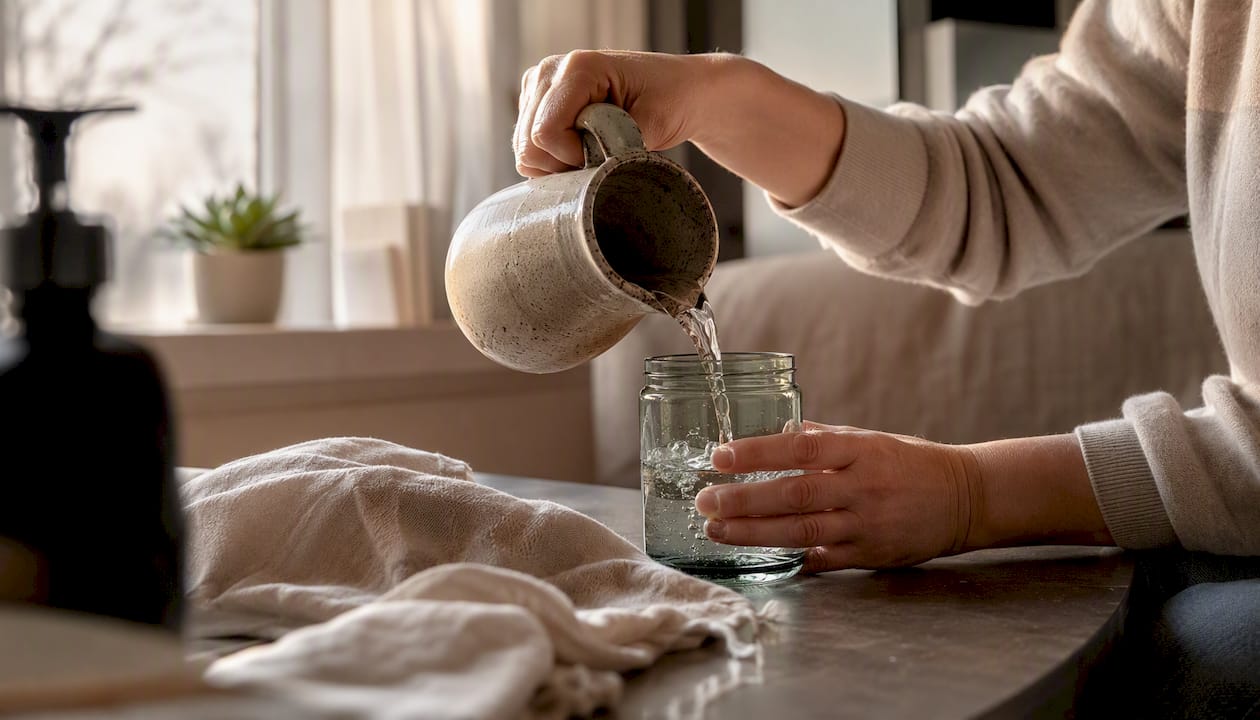
Reuse is the practice of using an item again, either for the same purpose or a new one, and Merriam-Webster recognizes it as both a verb (“to reuse a jar”) and an uncountable noun (“the reuse of packaging”). The spelling “reuse” without a hyphen is the standard contemporary form. Every time you reuse something, you skip the manufacturing energy that would go into producing a replacement, and that is where the real environmental win lives.
Three things you can do today:
- Keep glass jars and mason jars instead of recycling them. Wash, relabel, and use them for dry goods, homemade beauty products, or desk storage.
- Find your nearest Repair Café event and bring one broken household item, whether a lamp, a bag, or a small appliance.
- Swap one disposable personal-care product for a refillable version, such as a refillable deodorant or a glass-bottled body oil you can top up.
Stat to know: Lifecycle assessments show that reusing a product can reduce CO2 emissions by more than 50% relative to a full manufacture-use-dispose cycle in some cases.
Pro Tip: Start with the items you throw away most often. Check your recycling bin for one week and pick the top three repeat offenders. Those are your first reuse targets.
Key Takeaways
Reuse is the single most effective strategy for reducing household waste and carbon footprint because it skips the manufacturing and reprocessing energy that recycling still requires.
| Point | Details |
|---|---|
| Reuse beats recycling on energy | Lifecycle assessments show reuse can cut CO2 emissions by more than 50% compared with the full manufacture-use-dispose cycle. |
| Start with a three-day trash audit | Identify your top repeat disposables first, then swap one for a reusable alternative within the same week. |
| Community resources are ready now | Repair Cafés, tool libraries, and NYSDEC-listed programs give you free or low-cost support to repair and swap items today. |
| Track four simple metrics | Count avoided purchases, containers refilled, items repaired, and weight diverted each month to see real progress. |
| Personal care is a high-impact category | Switching to glass containers, refillable pumps, and clean-formula products reduces bathroom waste significantly over time. |
Table of Contents
- What does “reuse” actually mean, and what are the main types?
- Why reuse matters more than recycling
- Everyday reuse ideas and three DIY projects you can start this weekend
- Where to reuse, repair, and swap in the U.S.
- How to build reuse into your daily life in 30 days
- How businesses and public programs scale reuse
- How to measure your reuse impact at home
- Expert tips for reusable choices in personal care and beauty
- Common myths about reuse, and the real answers
- The part most reuse guides get wrong
- Sources
What does “reuse” actually mean, and what are the main types?
The word “reuse” covers a wider range of practices than most people realize. At its core, it means keeping an object in use rather than discarding it, but how you do that matters.
| Term | Plain definition | Quick example |
|---|---|---|
| Conventional reuse | Using an item again for its original purpose | Returning a glass milk bottle for refilling |
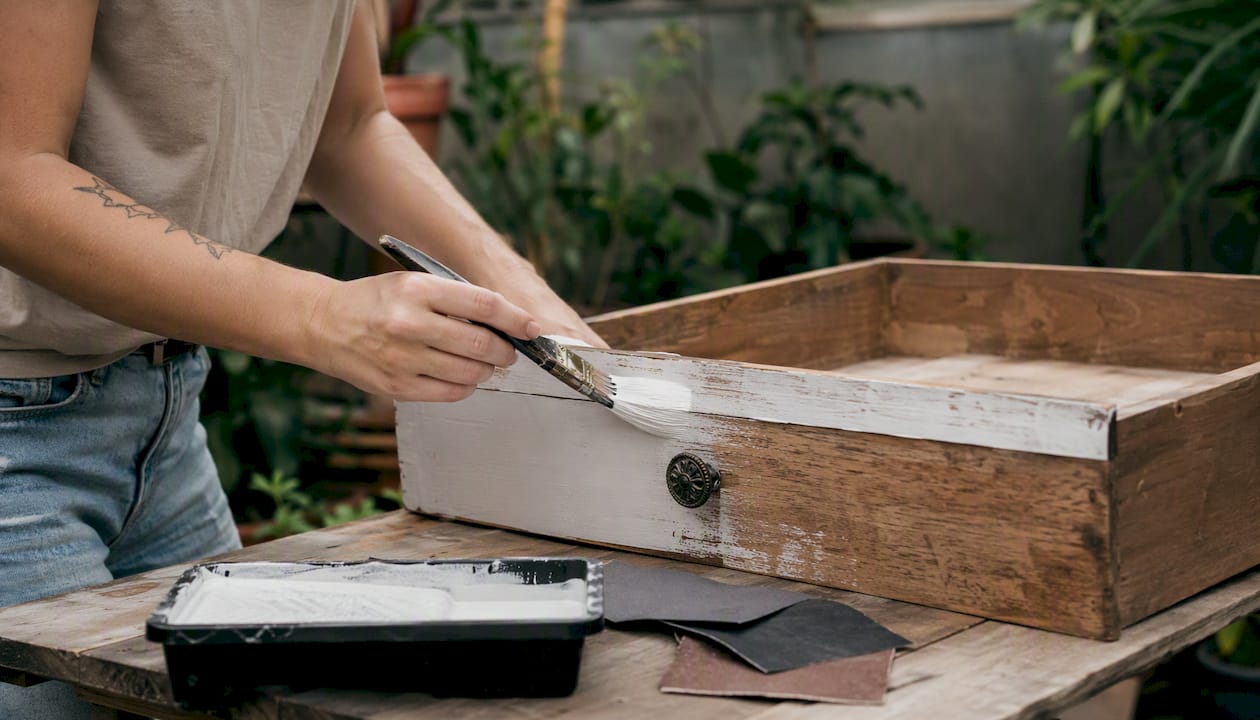
| Creative reuse / upcycling | Giving a whole object a new function without breaking it down | Turning a wooden drawer into a wall shelf |
| Refill / closed-loop | Returning a container to be cleaned and refilled by the same system | Refillable shampoo bottle at a zero-waste shop |
| Remanufacturing | Restoring a used product to like-new condition for resale | Refurbished electronics sold with a warranty |
| Regifting | Passing a usable item to someone who needs it | Donating outgrown children’s clothing to a neighbor |
Conventional reuse is the simplest form: a mason jar used for jam, then washed and used for overnight oats. No transformation needed.
Creative reuse, or upcycling, keeps the whole object intact and changes its role entirely. A vintage dresser drawer becomes a floating shelf; a glass wine bottle becomes a soap dispenser. Farmer’s Almanac catalogs dozens of projects like these that need little more than basic tools and a bit of imagination.
Refill and closed-loop systems are where businesses get involved. You return a container, the brand cleans and refills it, and the packaging never enters the waste stream. This model is growing in personal care, cleaning products, and food retail.
Remanufacturing goes a step further by restoring a used product to near-original condition, common in electronics, auto parts, and industrial equipment. Regifting is the simplest social form: passing something usable to someone who will actually use it.
Why reuse matters more than recycling
Reuse typically beats recycling on energy because it skips the entire reprocessing stage. Recycling still requires collecting, sorting, melting or pulping, and reforming materials into new products. Reuse sidesteps all of that. Wikipedia’s lifecycle analysis summary puts the potential CO2 reduction at more than 50% in some product categories compared with the full manufacture-use-dispose cycle.
Reuse vs. recycling at a glance: Recycling recovers material but consumes energy to reprocess it. Reuse keeps the object whole, skips reprocessing entirely, and preserves the energy already embedded in the product’s manufacture.
The environmental case goes beyond carbon:
- Reduced resource extraction. Every reused item means one fewer raw material pulled from the ground or forest.
- Less landfill pressure. Items that stay in use don’t fill landfill cells or drift into waterways.
- Lower ocean plastic risk. Durable, reused containers are far less likely to fragment into microplastics than single-use alternatives.
The economic case is just as real. Buying secondhand, refilling containers, and repairing instead of replacing can save a household hundreds of dollars a year. Community reuse infrastructure, including repair cafés and reuse centers, also creates local jobs and skills-sharing opportunities that recycling facilities rarely generate.
Everyday reuse ideas and three DIY projects you can start this weekend
The best reuse projects are the ones you’ll actually finish. Here are quick wins and one slightly more involved project, each with time estimates and safety notes.
Quick wins (no tools required)
- T-shirt cleaning rags. Cut worn cotton T-shirts into squares. They outperform paper towels on glass and are washable indefinitely.
- Glass jar soap dispenser. Drop a pump insert (available at most craft stores for under $2) into any wide-mouth mason jar. Fill with your favorite liquid soap.
- Cardboard seed starters. Toilet paper tubes filled with potting mix make perfect biodegradable seed starters. Plant the whole tube directly in the ground.
Mini-project 1: Drawer-to-shelf (30 minutes, beginner)
Materials: One salvaged wooden drawer, two L-brackets, screws, sandpaper, paint or wood stain.
- Remove any hardware and sand the drawer smooth.
- Check for lead paint if the piece is pre-1978. Use a lead test swab (available at hardware stores) before sanding. If positive, seal rather than sand.
- Apply a coat of paint or stain and let dry fully.
- Mark stud locations on your wall and attach L-brackets.
- Set the drawer on the brackets and secure from underneath.
The National Environmental Education Foundation notes that projects like this one require only basic tools and common household materials, making them accessible for most households.
Mini-project 2: Glass bottle herb garden (20 minutes, beginner)
Materials: Three clean glass bottles, twine, a wooden dowel or curtain rod, potting mix, herb seedlings.
- Soak bottles to remove labels completely.
- Wrap twine tightly around the bottle neck three times and knot securely.
- Hang bottles from the rod at window height.
- Fill with potting mix and plant one herb per bottle.
Safety note: Never reuse bottles that held chemicals, motor oil, or cleaning products for anything food-adjacent, even after washing.
Mini-project 3: Upcycled textile tote bag (45 minutes, intermediate)
Materials: One old pair of jeans or a heavy cotton shirt, scissors, a sewing needle and thread or a basic sewing machine.
- Cut the legs off jeans just below the crotch seam, or cut a shirt into a rectangle roughly 14 by 28 inches.
- Turn inside out and sew the bottom edge closed with a double seam.
- Cut two strips from the leftover fabric, each about 2 inches wide and 24 inches long, for handles.
- Fold each strip lengthwise, sew along the edge, and attach to the bag’s top corners.
- Turn right side out and reinforce the handle attachment points with a small square of stitching.
- Wash before use.
Pro Tip: Avoid reusing any container for food or children’s products if it previously held synthetic fragrances, dyes, or chemical cleaners. When in doubt, repurpose it for non-food storage instead.
Where to reuse, repair, and swap in the U.S.
You don’t have to do this alone. A growing network of community resources makes reuse practical and social.
Repair Cafés are volunteer-run events where skilled fixers help you repair electronics, clothing, furniture, and more, usually for free or a small donation. Repair Café’s global network includes hundreds of U.S. locations and provides guidance for finding or starting a local event.
Reuse centers and habitat stores accept and resell building materials, furniture, and household goods. Many are affiliated with Habitat for Humanity ReStores, which operate across the country.
Tool libraries let you borrow drills, saws, and specialty tools instead of buying them. Local Tools maintains a searchable directory of tool-lending libraries across the U.S., covering dozens of cities and growing.
NYSDEC’s reuse and repair program page lists practical steps and program examples for New York residents, and its framework mirrors what many other states offer. Check your own state’s environmental agency website for equivalent local programs.
Online swap networks and Freecycle groups let you give away or claim items for free within your zip code. Search “Freecycle [your city]” or look for Buy Nothing groups on Facebook for your neighborhood.
Thrift stores and secondhand markets (Goodwill, Salvation Army, local consignment shops) are the most accessible entry point for most people. Textile recovery programs, like those listed by Recycle Right NY, also accept clothing and fabric that thrift stores can’t sell, diverting it from landfill.
Refill stations for cleaning products, personal care, and bulk dry goods are appearing in natural grocery stores and zero-waste shops nationwide. Bring your own clean container and pay by weight or volume.
How to build reuse into your daily life in 30 days
A realistic plan beats an ambitious one you abandon by week two. Here is a step-by-step approach that builds gradually:
- Audit your trash (Days 1–3). For three days, set aside everything you throw away. Note which items appear repeatedly. Those are your highest-impact swap targets.
- Set one specific goal (Day 4). Pick one category, such as plastic bags, paper towels, or single-use bottles, and commit to replacing it with a reusable alternative this month.
- Swap one disposable (Days 5–7). Buy or repurpose one reusable item to replace your chosen disposable. A cloth produce bag, a glass water bottle, or a set of beeswax wraps all work well.
- Find one refill option (Week 2). Locate a refill station, a concentrated cleaning product, or a personal-care brand that offers refillable packaging near you or online.
- Join one local reuse resource (Week 2–3). Sign up for a local Buy Nothing group, visit a thrift store, or register for a Repair Café event.
- Set up a home reuse station (Week 3). Designate a shelf or bin for clean jars, bags, and containers ready to be reused. Label it clearly so the habit sticks.
- Inspect before buying used (ongoing). When shopping secondhand, check for structural damage, mold, pest evidence, and safety recalls. For upholstered items, check seams and fabric for staining or odor. For children’s items, verify the product has not been recalled at Cpsc.
- Know when to retire an item (ongoing). A cracked jar, a frayed electrical cord, or a container with a persistent chemical smell should be recycled or disposed of properly, not reused.
Buying-used hygiene checklist:
- Wash all secondhand clothing before wearing, using hot water where the fabric allows.
- Sanitize hard-surface containers (glass, stainless steel) with a diluted white vinegar solution or a food-safe sanitizer.
- Avoid reusing porous plastics (scratched cutting boards, cloudy plastic containers) for food. Scratches harbor bacteria that washing can’t fully remove.
- Check wooden items for mold, rot, or pest damage before bringing them indoors.
How businesses and public programs scale reuse
Individual habits matter, but the systems behind them matter just as much. Several business models make reuse reliable at scale.
- Refill-as-service. A local refill shop or zero-waste grocery lets customers bring containers and fill them from bulk dispensers. The business handles sourcing and quality; the customer handles the container.
- Deposit-return systems. Customers pay a small deposit on a container at purchase and reclaim it when they return the empty. Common in beverage bottles and expanding into personal care.
- Take-back programs. Brands accept used packaging by mail or in-store, clean it, and refill or recycle it through a controlled process. This is a closed-loop model.
- Rental and sharing models. Tool libraries, furniture rental, and clothing rental services let customers access items without owning them, reducing total production demand.
- Remanufacturing and social enterprise reuse centers. Nonprofits and social enterprises collect, restore, and resell goods, creating jobs while keeping materials in circulation.
EPA guidance on sustainable manufacturing makes clear that integrating reuse into core business operations, rather than treating it as a side project, improves brand recognition and can lower lifecycle environmental impacts. Brands that design for reuse from the start, with easy-to-remove labels, durable lids, and refill-compatible closures, build stronger customer loyalty over time.
How to measure your reuse impact at home
Tracking progress makes the habit stick and shows you where the biggest wins are. Four metrics cover most household reuse activity:
| Metric | What to track | How to measure |
|---|---|---|
| Avoided purchases | Items you would have bought new but reused instead | Count per month; estimate dollar value |
| Containers refilled | Refillable bottles, jars, or pouches topped up | Count per month |
| Items repaired | Broken items fixed rather than replaced | Count per month; note repair cost vs. replacement cost |
| Weight/volume diverted | Estimated weight of items kept out of trash | Weigh items before deciding to keep vs. discard |
To estimate avoided carbon, use the EPA’s Greenhouse Gas Equivalencies Calculator, which converts material weights into CO2 equivalents. For a simpler approach, note that every pound of clothing kept in use rather than landfilled avoids the emissions associated with producing a new garment, a figure the EPA’s waste characterization data can help you estimate.
A simple monthly log, even a paper notebook or a spreadsheet, is enough. Track your four metrics at the end of each month, note what changed, and set one new target for the next month.
Expert tips for reusable choices in personal care and beauty
Personal care is one of the highest-waste categories in the average American bathroom, and it’s also one of the easiest to address with reuse strategies.
Checklist for personal-care reuse:
- Choose products in glass or stainless steel containers over single-use plastic. Glass is non-porous, easy to sterilize, and compatible with a wide range of formulas.
- Look for pump-top bottles with replaceable pumps. Many pumps can be transferred to a new bottle when the original runs out.
- Opt for products with easy-to-remove labels (paper labels over shrink-wrap) so containers can be cleaned and repurposed cleanly.
- Avoid reusing containers that held synthetic fragrance or chemical preservatives for DIY beauty formulas. Residue can interact with new ingredients.
- For creams and balms, avoid porous materials like unglazed ceramic or scratched plastic. These harbor bacteria that can contaminate your product.
- Check shelf life before refilling. An opened product that has exceeded its period-after-opening symbol (the open-jar icon on the label) should not be topped up into a new container.
Sustainable packaging design guidance from FSC highlights that easy-to-remove labels, reusable lids, and refill-compatible closures reduce waste and strengthen the brand-customer relationship. Theholisticscienceco builds exactly this thinking into its botanical skincare and body care line, using ingredient-transparent formulas in packaging designed with reuse in mind. For a deeper look at how refillable packaging fits into a clean-beauty routine, the Theholisticscienceco waste and refill guide is a practical starting point.
Pro Tip: When switching to a refillable personal-care container, run it through the dishwasher or soak it in a diluted white vinegar solution for 10 minutes before the first fill. This removes any residue from the previous product and gives you a clean, safe base.
You can also explore SweeTee Beauty’s skincare collection for product formats that pair well with a reuse-first approach to your beauty routine.
Common myths about reuse, and the real answers
A few persistent concerns keep people from getting started. Here is what the evidence actually says.
- Myth: Reused containers are unsanitary. Glass and stainless steel containers sanitize completely with hot water and a diluted vinegar or food-safe sanitizer rinse. The risk is real only with porous or scratched surfaces, which should be retired from food use.
- Myth: Reuse is more expensive upfront and overall. The upfront cost of a reusable item is higher, but the per-use cost drops sharply over time. A $15 stainless steel water bottle used daily for three years costs a fraction of a cent per use.
- Myth: Recycling is always better than reuse. Recycling recovers material but consumes energy to reprocess it. Reuse keeps the object whole and skips that energy cost entirely, making it the preferred option in the waste hierarchy when it’s feasible.
- Myth: Secondhand items are lower quality. Many secondhand items, particularly furniture, cast iron cookware, and natural-fiber clothing, outlast their modern equivalents because they were built to older durability standards.
- Myth: Reuse only works for simple items. Remanufactured electronics, refurbished appliances, and restored furniture all demonstrate that reuse scales to complex products with proper inspection and repair.
- Myth: It takes too much time. Setting up a home reuse station takes about 20 minutes. After that, the habit runs on autopilot.
“Reuse is the single most effective household strategy to reduce lifecycle carbon footprint because it avoids manufacturing and material-processing energy entirely.” This framing, supported by lifecycle analysis, places reuse above both recycling and composting in the waste hierarchy for most durable goods.
On the legal side, reselling used goods in the U.S. is generally permitted, but items subject to federal safety standards (children’s products, car seats, cribs) must meet current CPSC requirements even when sold secondhand. When in doubt, check CPSC.gov before reselling regulated items.
The part most reuse guides get wrong
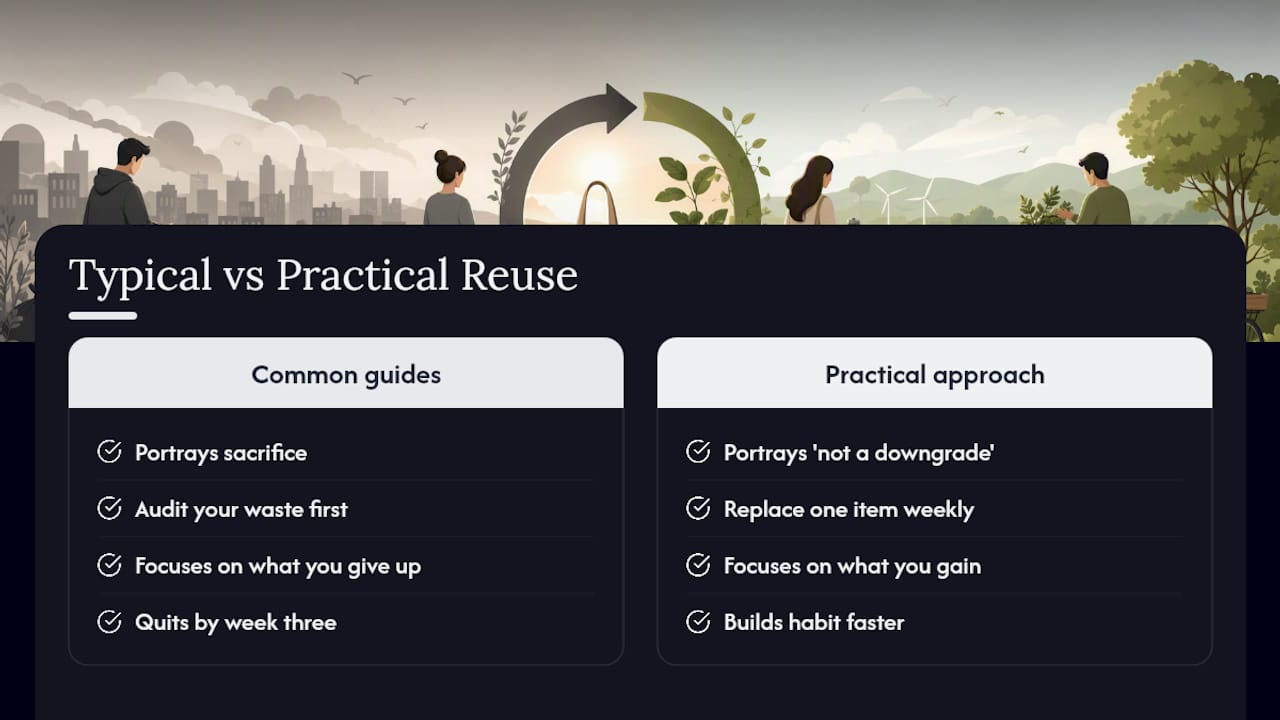
Most guides frame reuse as a sacrifice: less convenience, more effort, a slightly worse version of the life you already have. That framing is exactly backwards, and it’s why so many people start with good intentions and quit by week three.
The real insight from the lifecycle evidence is that reuse is not a downgrade. A glass jar is a better storage container than a plastic bag. A repaired lamp is more interesting than a new one from a big-box store. A refillable deodorant in a well-designed aluminum case is a nicer object to hold than a disposable plastic stick. The conventional advice focuses relentlessly on what you give up. The more useful question is what you gain.
Where the standard guidance also falls short is in sequencing. Most articles tell you to “audit your waste” as step one, which sounds reasonable but produces a list so long it’s paralyzing. A better first move is to pick one item you already throw away every single week and replace just that. One swap, done well, builds the habit faster than a comprehensive audit that never leads to action.
The personal-care category deserves more attention than it typically gets in general reuse guides. Bathroom waste is among the most consistent and highest-volume waste streams in American households, and it’s almost entirely avoidable. Choosing products in glass, opting for refillable formats, and understanding shelf life so you’re not discarding half-used products are moves that compound quickly. Theholisticscienceco’s approach to ingredient transparency and packaging design reflects exactly this thinking: products that are worth keeping, in containers worth reusing.
Start with one swap. Track it for a month. Then add another.
Sources
These U.S.-focused resources give you authoritative guidance and local program listings:
- Reuse - Wikipedia
- Sustainable manufacturing - U.S. EPA
- Get Started with Reuse and Repair - NYSDEC
- Repair Café
Recommended
- Reuse, Refill, Reduce: Your Practical Waste Guide - The Holistic Science Co.
- Small Batch Beauty Products Explained: What You Need to Know - The Holistic Science Co.
- The Holistic Science Co.
- Top 4 Biodegradable Body Wash Alternatives 2026 - The Holistic Science Co.